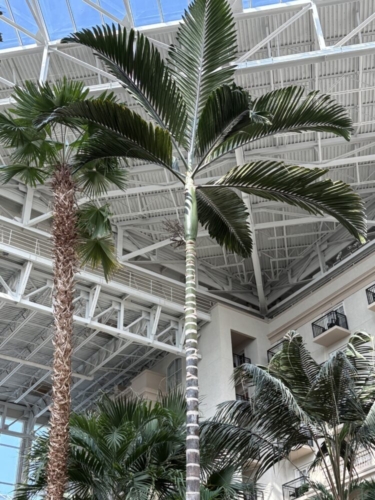
Imagine growing a beautiful palm for years, proudly identifying it as Kentiopsis oliviformis, only to discover that its scientific name has changed to Chambeyronia oliviformis. The palm hasn't changed. Its graceful foliage, distinctive appearance, and growing requirements remain exactly the same. Yet botanists now recognize it as belonging to a different genus.
So, what happened?
Welcome to another edition of What's in a Name?, where we explore the fascinating stories behind palm nomenclature and the scientific discoveries that occasionally rewrite the botanical family tree.
🌴 Three Genera, One Remarkable Island
Located in the South Pacific, approximately 750 miles east of Australia, New Caledonia is internationally recognized for its extraordinary botanical diversity and high levels of endemism. Its isolation and varied habitats have produced a remarkable collection of palms, many of which occur nowhere else on Earth.
Among these are several spectacular species historically classified within three separate genera:
* Chambeyronia — Best known to enthusiasts for Chambeyronia macrocarpa, the celebrated Red Leaf Palm.
* Kentiopsis — A group of elegant, solitary palms prized for their graceful crowns and ornamental appeal.
* Actinokentia — A small group of distinctive palms found in New Caledonia's tropical forests.
For decades, botanists recognized these as separate genera, distinguishing them through various characteristics of their flowers, fruits, and other structures. But as scientific knowledge advanced, researchers began reconsidering just how closely related these palms really were.
🔬 A Botanical Family Reunion
In 2021, a team of researchers led by Donald R. Hodel published a significant taxonomic revision in PALMS, the journal of the International Palm Society. Their study, titled Reassessment of the Archontophoenicinae of New Caledonia and Description of a New Species, examined the relationships among these remarkable palms.
Drawing upon morphological evidence and molecular research, the authors concluded that the traditional separation of Actinokentia, Kentiopsis, and Chambeyronia did not adequately reflect their evolutionary relationships.
Their solution was to recognize a single, expanded genus: Chambeyronia.
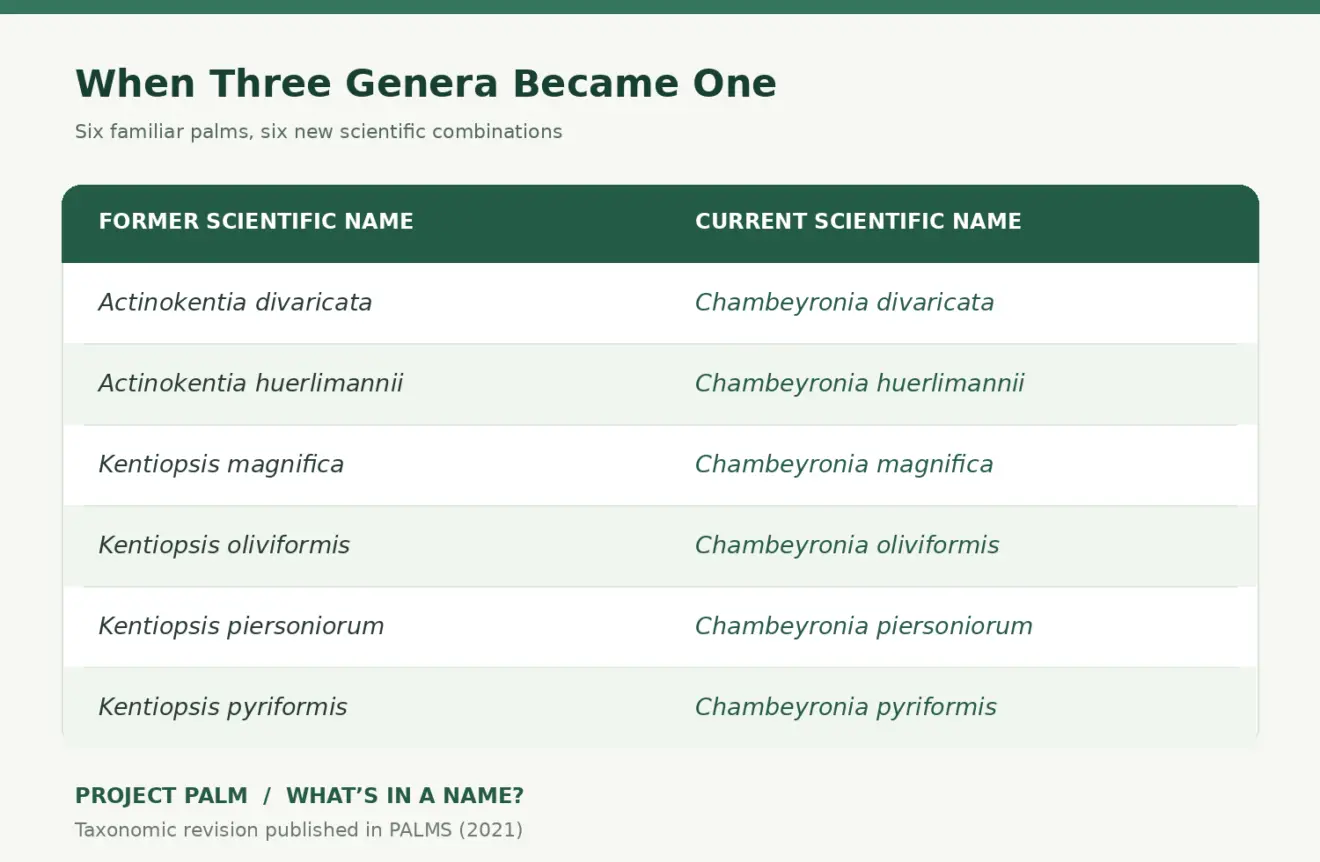
As a result, six species formerly classified under Actinokentia and Kentiopsis received new scientific combinations. The revision also formally described a previously unrecognized species, Chambeyronia houailouensis, bringing the genus to nine accepted species. Subsequent genetic research has provided further support for this classification.
🌿 The Names That Changed
For palm enthusiasts familiar with the former scientific names, the changes were substantial.
Importantly, these were not newly discovered palms. They were existing species reassigned to a genus that better reflected their evolutionary relationships. And while the changes may initially seem confusing, they illustrate an important principle of botanical science:
Scientific names are not simply labels. They represent our evolving understanding of how plants are related.
📸 Familiar Faces, New Family Connections
Perhaps the most fascinating aspect of the expanded Chambeyronia genus is the diversity of palms it now includes. Some of the more well known species are listed below:
Chambeyronia macrocarpa | Flamethrower Palm
Among the best-known palms of New Caledonia, this species is admired for its spectacular emerging leaves, which frequently display brilliant shades of red or reddish bronze before gradually turning green. Its colorful new growth has made it a favorite among tropical palm collectors, and it remains one of the most recognizable members of the genus.
Among its distinctive varieties are Chambeyronia macrocarpa var. hookeri, recognized for its striking pale yellow crownshaft and leaf stalks, and var. flavopicta, distinguished by its unusual green-and-yellow mottled or striped crownshaft and brilliant red emerging leaves. These variations add another dimension to the remarkable ornamental diversity of this celebrated New Caledonian palm.
Explore Chambeyronia macrocarpa
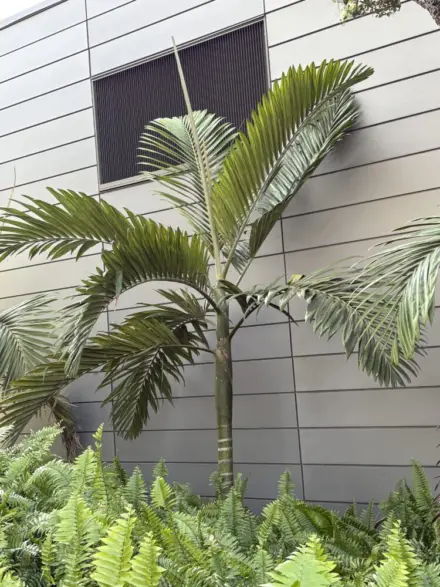
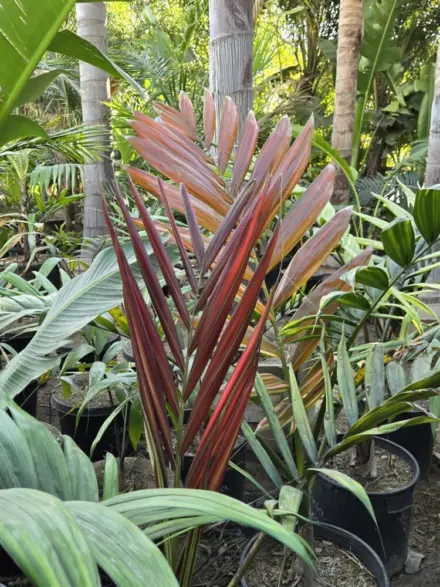
Chambeyronia oliviformis | Tindéa Palm, Canala Palm
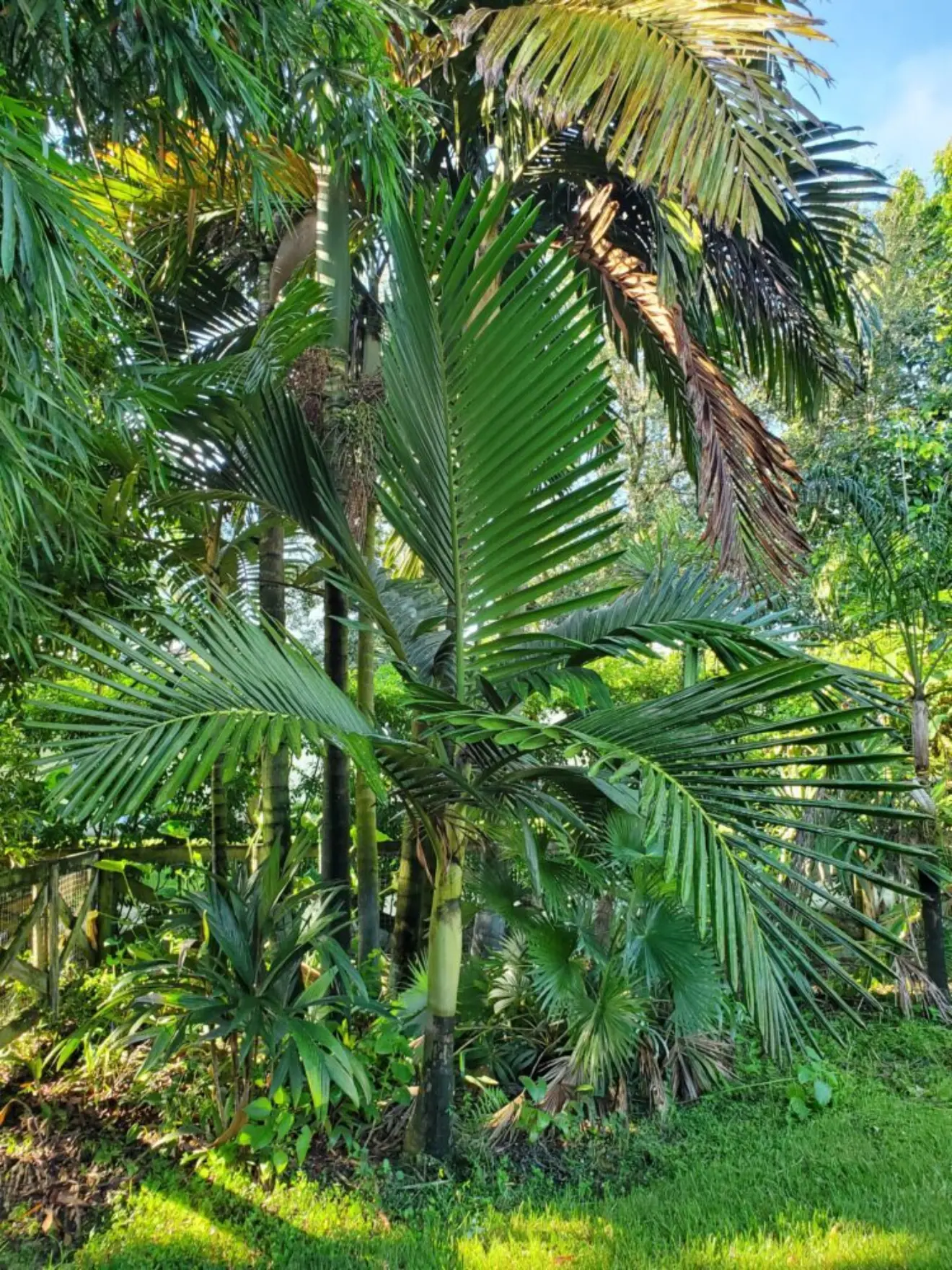
Formerly Kentiopsis oliviformis. This magnificent solitary palm is native to the forests of central New Caledonia, where it can reach heights of 100 feet (30 meters), making it one of the tallest native palms on the island. Its smooth, gray, prominently ringed trunk supports a long, pale green to grayish-green crownshaft topped by a striking crown of stiff, upright, feather-like leaves. The dark green foliage creates a distinctive, almost fountain-like silhouette, while its small, oval fruits turn bright red when ripe. Naturally found in semi-humid forests, often along seasonal watercourses, this impressive species is prized by collectors for its elegant appearance and commanding presence in the landscape.
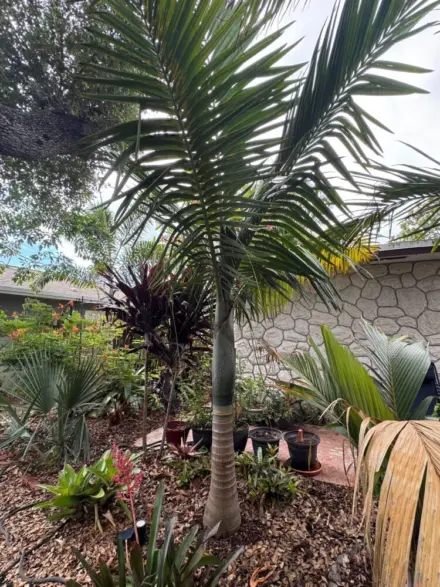
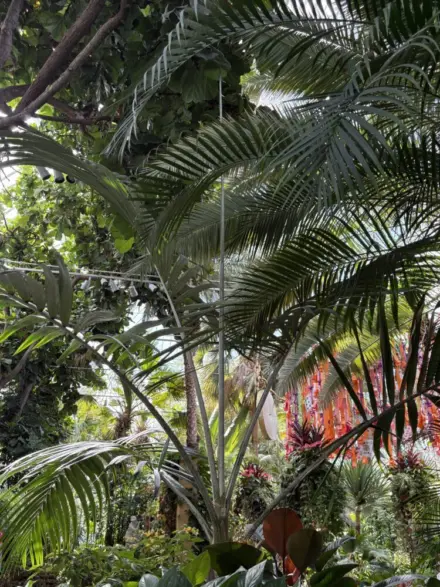
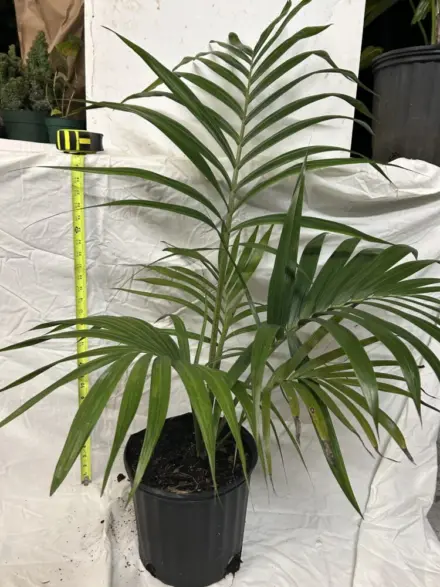
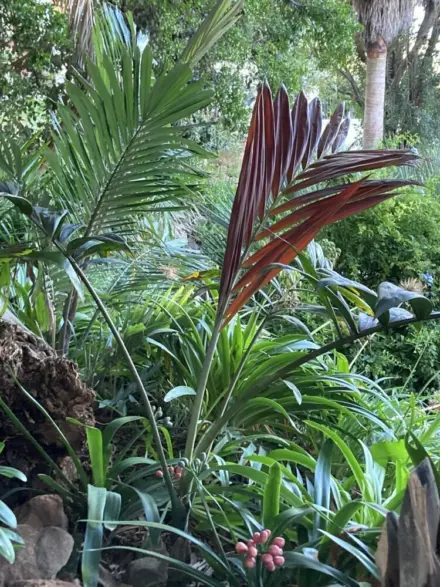
Chambeyronia divaricata | Miniature Flamer Thrower Palm
Formerly Actinokentia divaricata. This elegant, relatively small palm is native to the moist forests of central and southeastern New Caledonia. It develops a slender, solitary trunk topped by a sparse crown of gracefully arching, feather-like leaves, with widely spaced leaflets and a distinctive reddish crownshaft. Perhaps its most striking feature is its emerging foliage, which often displays beautiful shades of red or reddish bronze before maturing to green. Still quite rare in cultivation.
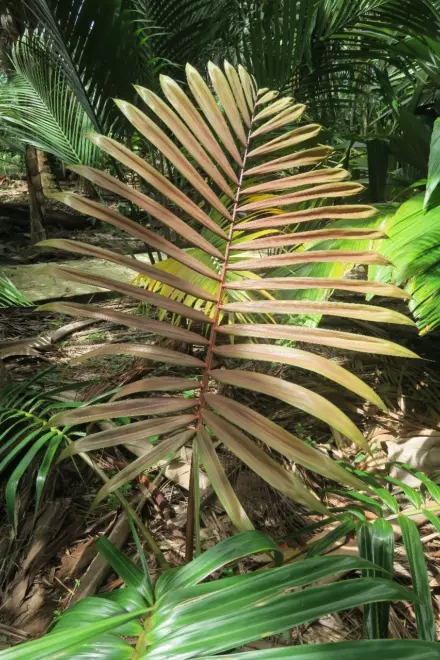
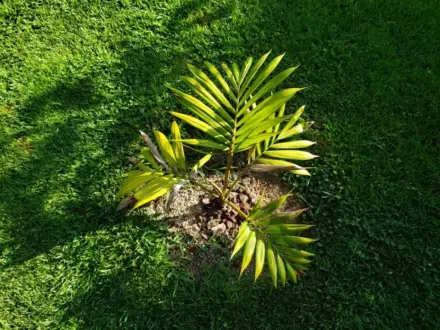
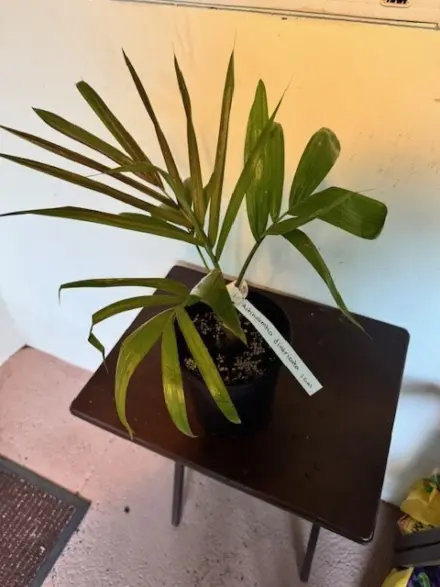
Chambeyronia houailouensis | Houailou Red Leaf Palm
Unlike the six species that received new scientific combinations, this species was formally described as a new species in the 2021 revision. Its name refers to the Houaïlou region of New Caledonia, adding another fascinating chapter to the botanical history of this remarkable island.
🌎 Why Do Botanists Change Scientific Names?
Historically, palm classification relied heavily on observable physical characteristics, including trunk structure, leaf arrangement, inflorescences, flowers, and fruits. These features remain essential to botanical identification and classification. However, modern molecular techniques allow researchers to examine genetic relationships that may not be obvious from outward appearance alone.
Sometimes, those discoveries confirm long-standing classifications. Other times, they reveal that species previously assigned to different genera are more closely related than once believed. When researchers conclude that a classification no longer accurately represents evolutionary relationships, they may propose changes.
The Chambeyronia revision is an excellent example. What once appeared to be three separate genera is now understood as a more closely related group of palms, united under one scientific name. And the story is a reminder that botanical science is never truly finished.
🌴 Discover All Nine Species of Chambeyronia
Today, the Royal Botanic Gardens, Kew recognizes nine accepted species within Chambeyronia, all native to New Caledonia. We're pleased that all nine are represented in the Project Palm Species Library!
Explore each species below:
Project Palm also features additional forms of Chambeyronia macrocarpa, including var. hookeri and var. flavopicta, further illustrating the remarkable diversity within this genus.
📷 Help Us Tell Their Story!
One of the most rewarding aspects of Project Palm is seeing these extraordinary species through photographs contributed by enthusiasts around the world. Are you growing a Chambeyronia in your collection? Have you photographed one at a botanical garden or encountered one in its native habitat?
We'd love to see your photographs!
Your contributions help expand our photographic Species Library and give fellow enthusiasts the opportunity to discover and appreciate palms they may never encounter in person. Membership is completely free, and every contribution helps our worldwide community grow.
References and Further Reading
Hodel, D. R., et al. (2021). Reassessment of the Archontophoenicinae of New Caledonia and Description of a New Species. PALMS, 65(3), 109–131.
Royal Botanic Gardens, Kew. Plants of the World Online: Chambeyronia.