Introduction
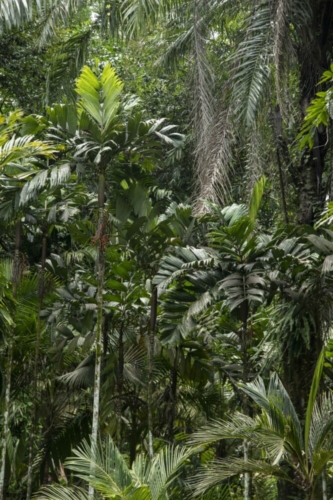
Walk through the shaded understory of a Southeast Asian rainforest and you may notice something remarkable: palms everywhere—but no two quite the same. Some grow in tight, elegant clusters, while others stand alone on slender stems. Some display brilliant red crownshafts, others arrange their leaves in perfect flat planes, and a few remain so small they could fit comfortably in a shaded courtyard garden. These palms belong to a single genus: Pinanga.
For palm enthusiasts, Pinanga represents one of the purest expressions of diversity within a single lineage. From miniature understory dwellers to taller forest species with striking ornamental features, this genus offers a window into how palms adapt, specialize, and evolve within tropical ecosystems. For collectors, it offers something even more compelling: endless discovery.
Genus Summary: Understanding Pinanga
The genus Pinanga includes more than 120 described species and is distributed across Southeast Asia, southern China, Indonesia, Malaysia, the Philippines, Thailand, Vietnam, and New Guinea. Nearly all species are adapted to rainforest understory environments, where filtered light, high humidity, and organically rich soils define the growing conditions.
Most Pinanga species are clustering palms, producing multiple stems from the base, though solitary species do exist. Crownshaft color varies widely, ranging from green to deep red, maroon, or powdery blue-green. Leaf forms also vary considerably, from gracefully arching feather-shaped leaves to highly specialized forms rarely seen elsewhere in the palm world.
Unlike many larger palms that dominate forest canopies, Pinanga thrives beneath them. This understory specialization has allowed the genus to diversify extensively, occupying ecological niches defined by elevation, soil moisture, light availability, and geography. The result is a genus rich in variation yet unified by elegance.
Follow links to the species page for more photos, informaiton and cultivation tips for each Pinanga species detailed below.
Structural Extremes: When Palms Break the Mold
Pinanga disticha | Legong Palm
Few palms immediately capture attention like Pinanga disticha. Its leaves are arranged in a single flat plane, giving the plant an almost two-dimensional appearance when viewed from the side. This unusual arrangement is rarely seen among palms and gives the species a striking architectural presence. Native to Borneo, it grows slowly beneath dense rainforest canopy, where its flattened form may help maximize light capture in deeply shaded environments.
Pinanga simplicifrons var. simplicifrons
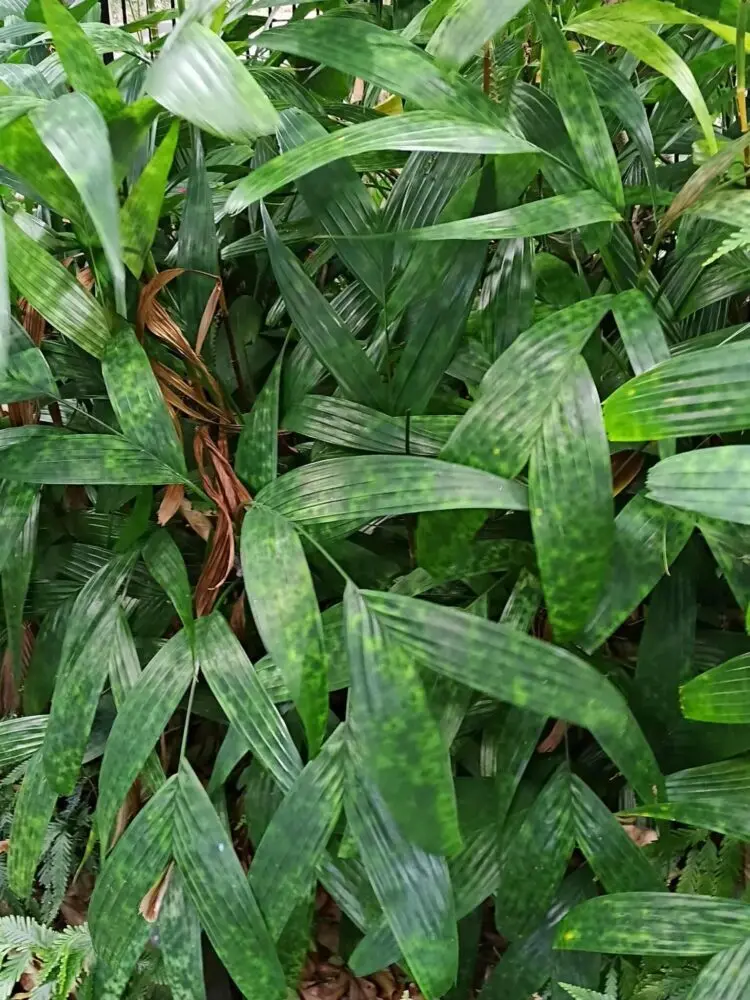
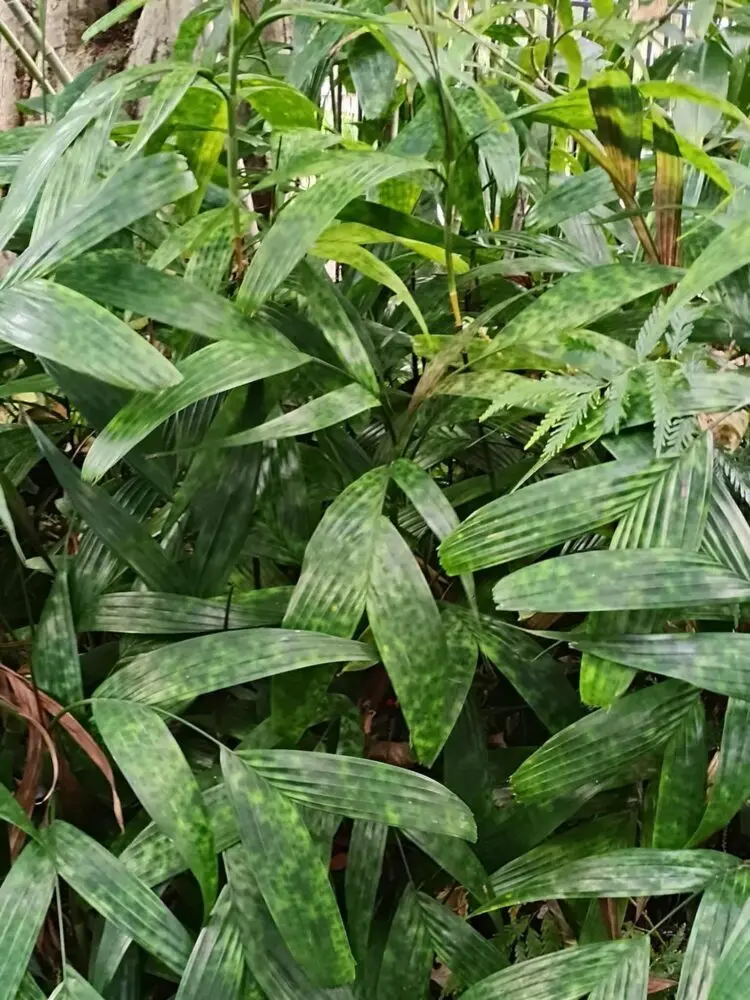
This species demonstrates how subtle variations in leaflet structure can dramatically alter a palm’s appearance. Its leaves display a simplified, refined arrangement that gives the crown a clean, deliberate form. Found in Southeast Asian rainforests, it exemplifies the genus’ ability to evolve highly specialized foliage suited to specific understory conditions.
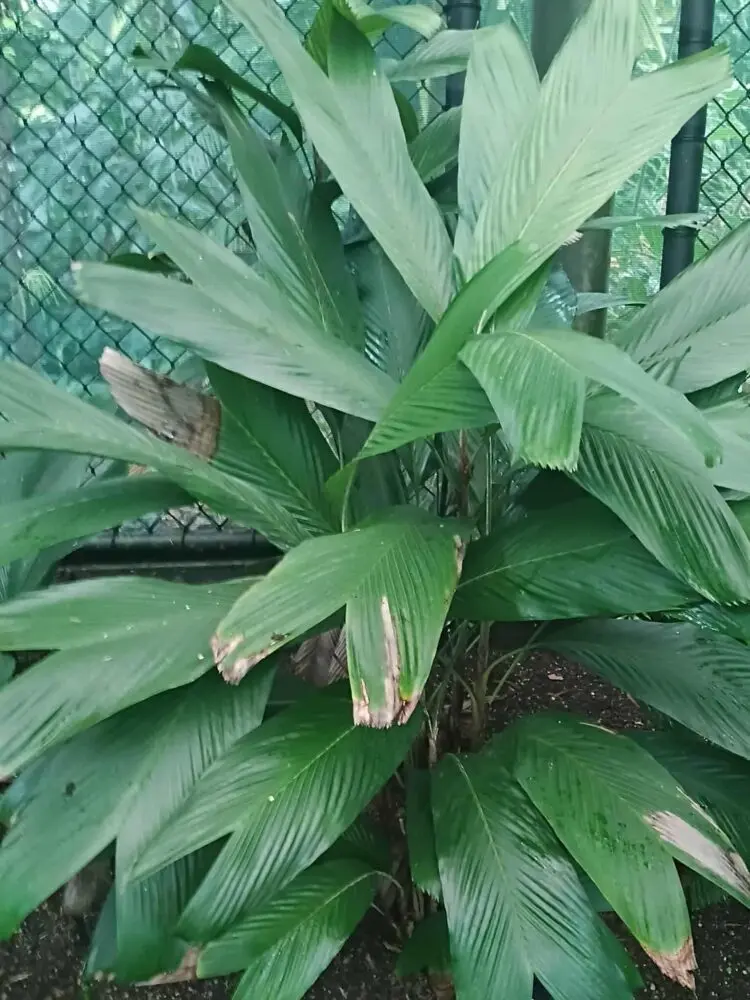
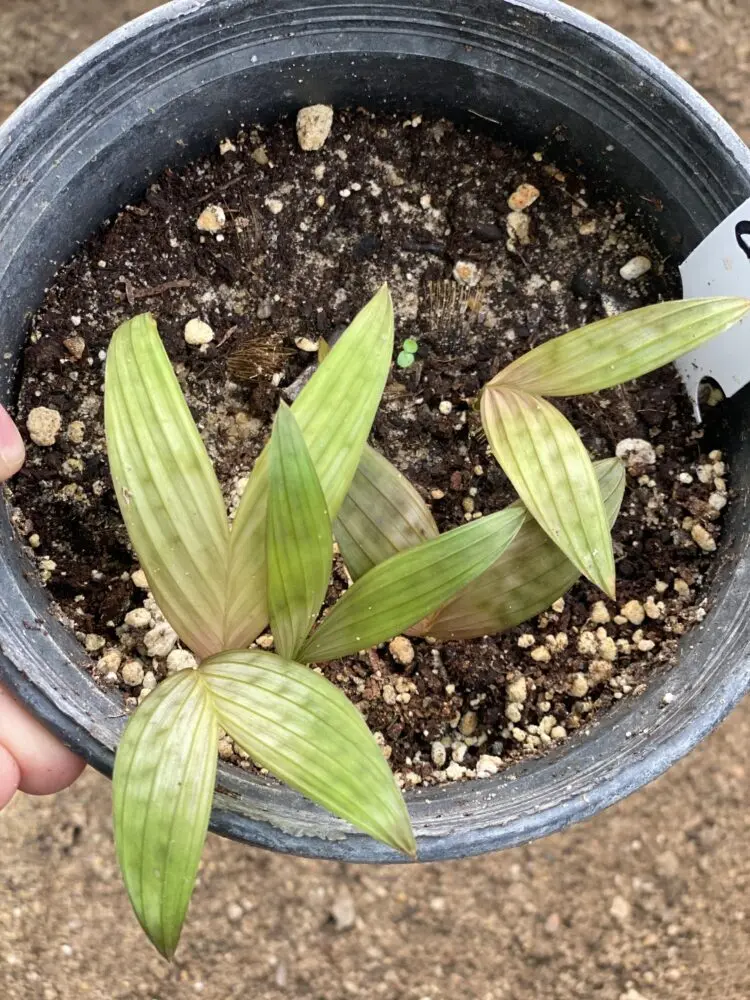
Among the smallest species in the genus, Pinanga veitchii rarely exceeds a few feet in height. Its compact size makes it an ideal understory palm, thriving in protected, shaded environments. Despite its small stature, it maintains all the elegance and structural precision that define the genus.
Color and Ornamentation: Nature’s Artistic Expression
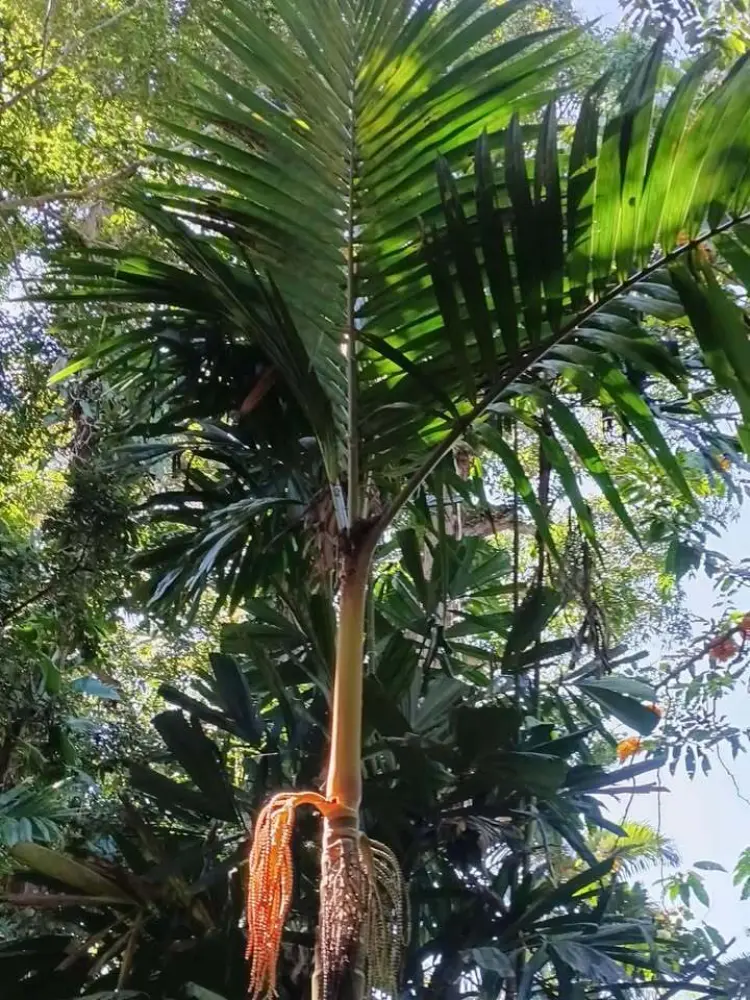
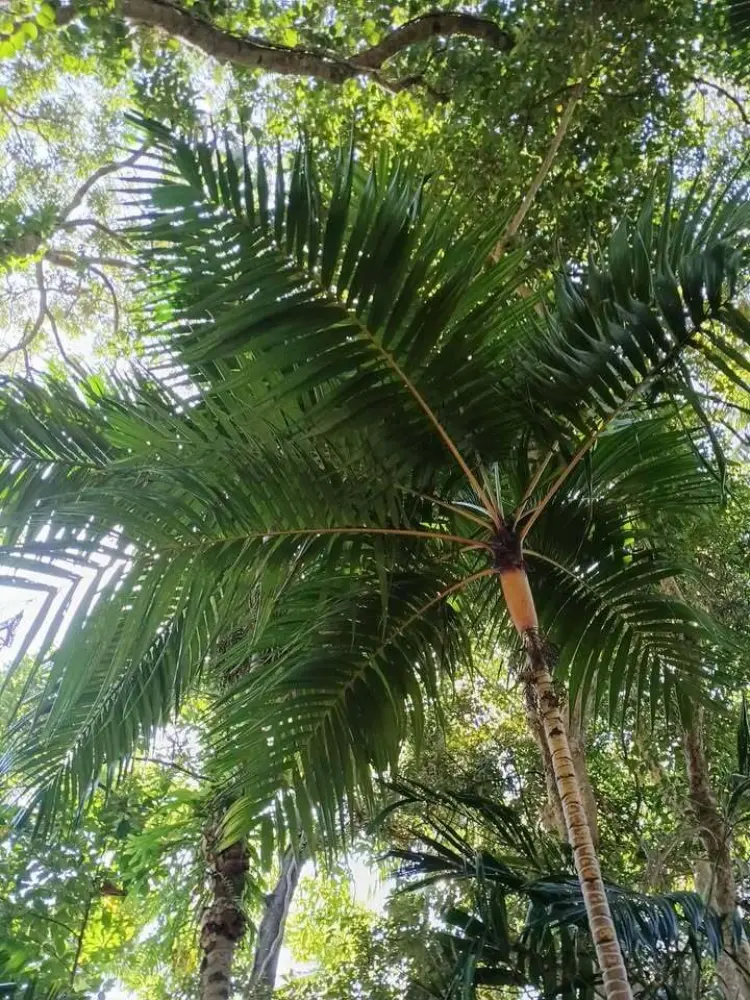
One of the most visually stunning species in the genus, Pinanga maculata is known for its deep red crownshaft and beautifully mottled stems. These colors contrast vividly with its green foliage, creating a palm that appears almost painted. Native to Malaysia and Indonesia, it remains a prized species among collectors.
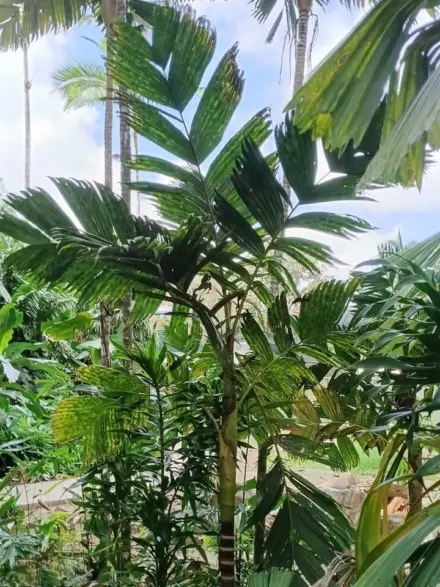
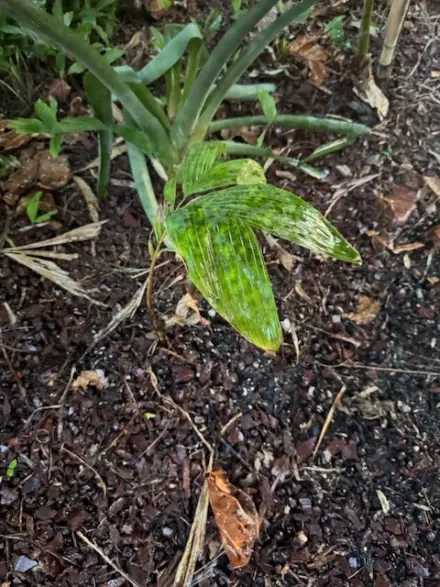
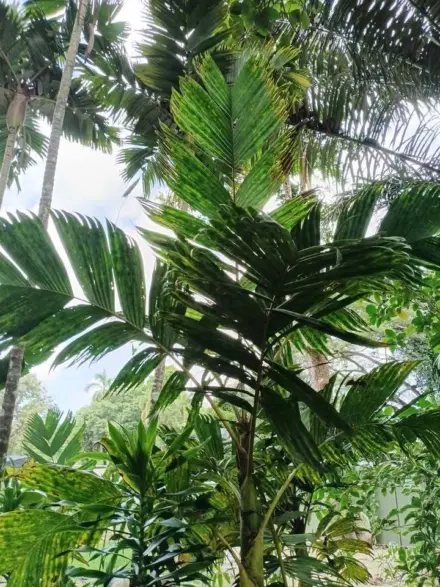
With its distinctive golden crownshaft and refined proportions, Pinanga caesia offers a more subtle but equally captivating ornamental presence. This species demonstrates that even within a single genus, crownshaft coloration alone can produce dramatically different visual effects.
Classic and Robust Forms: The Genus at Its Core
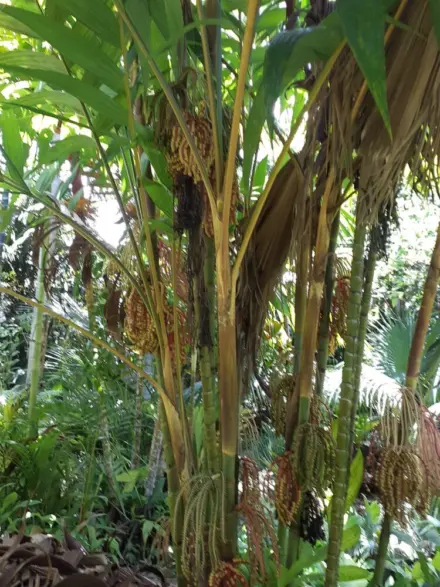
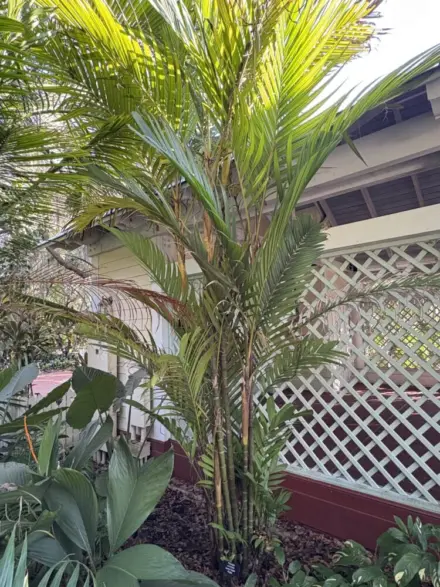
Pinanga coronata | Ivory Cane Palm
Perhaps the most widely recognized species in the genus, Pinanga coronata represents the classic clustering form. Its slender stems and balanced crown create a silhouette that defines the genus for many enthusiasts. Its adaptability and elegance have made it one of the most cultivated Pinanga species worldwide.
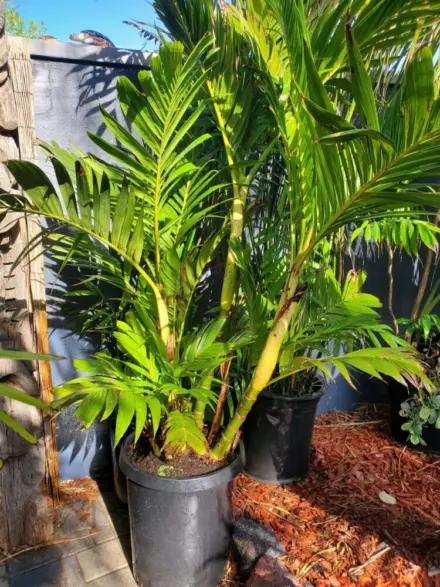
Pinanga speciosa | Violet Crownshaft Palm
As its name suggests, Pinanga speciosa is a particularly impressive species, with larger proportions and a more robust presence than many of its relatives. It demonstrates that while most Pinanga species remain modest in size, some can develop into substantial understory palms.
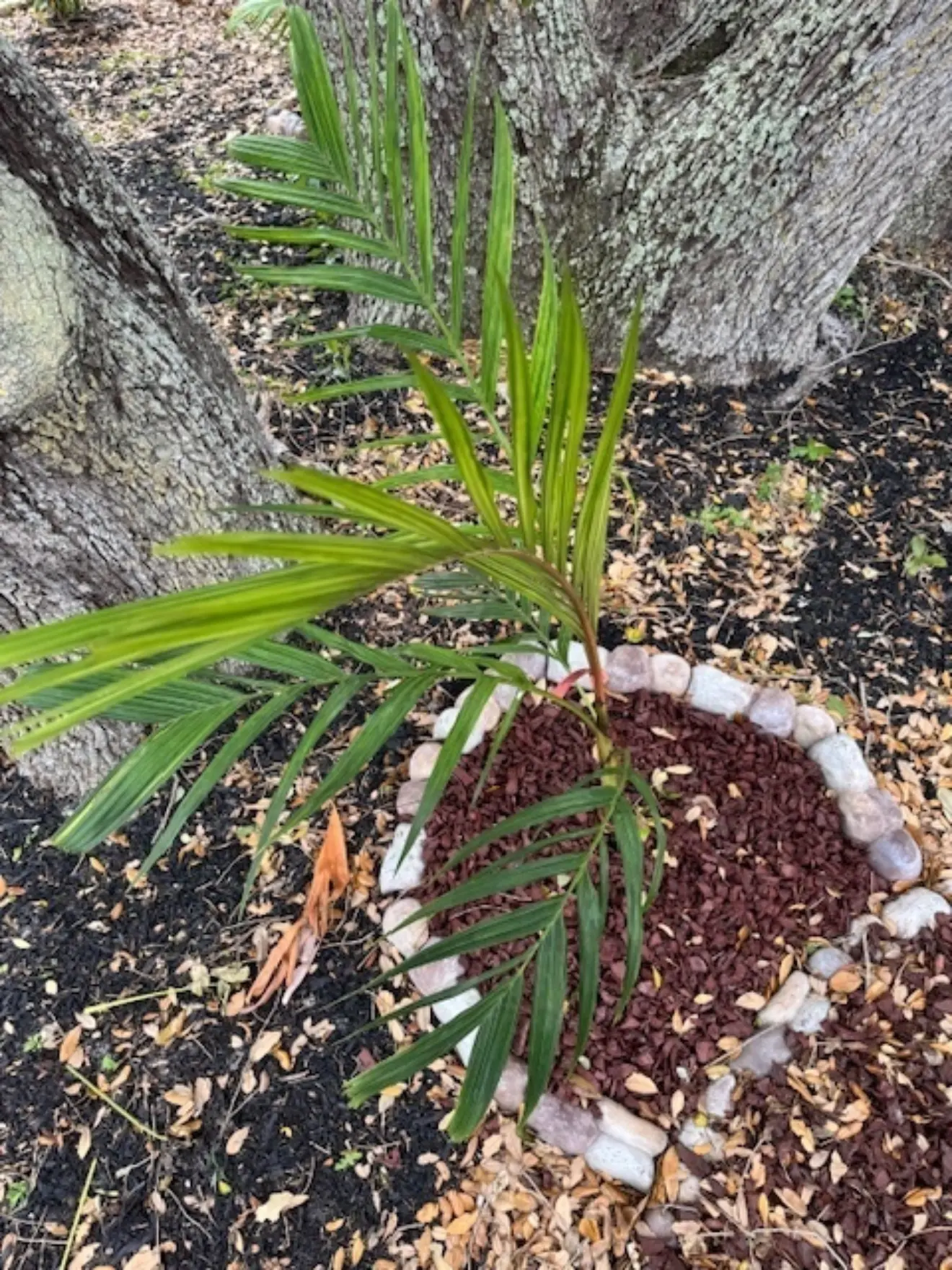
Pinanga sylvestris | Chocolate Cane Palm
Formerly Pinanga cochinchinensis. This species thrives deep within forest interiors, where stable humidity and filtered light allow it to develop its refined form. It represents the genus’ ability to adapt to the most stable and protected rainforest environments.
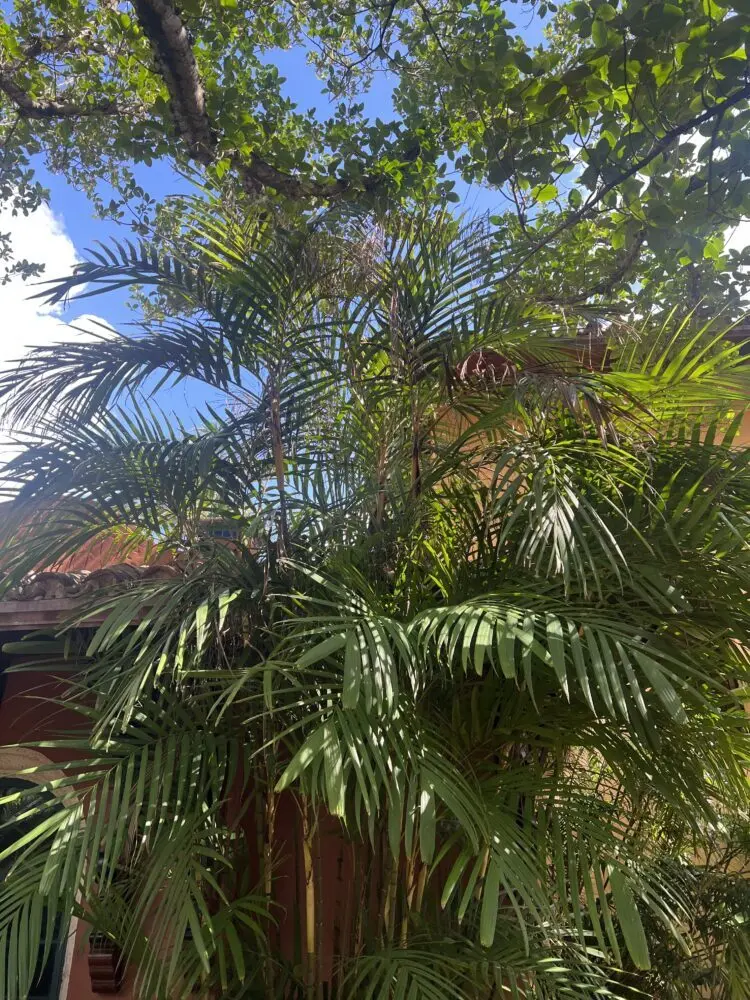
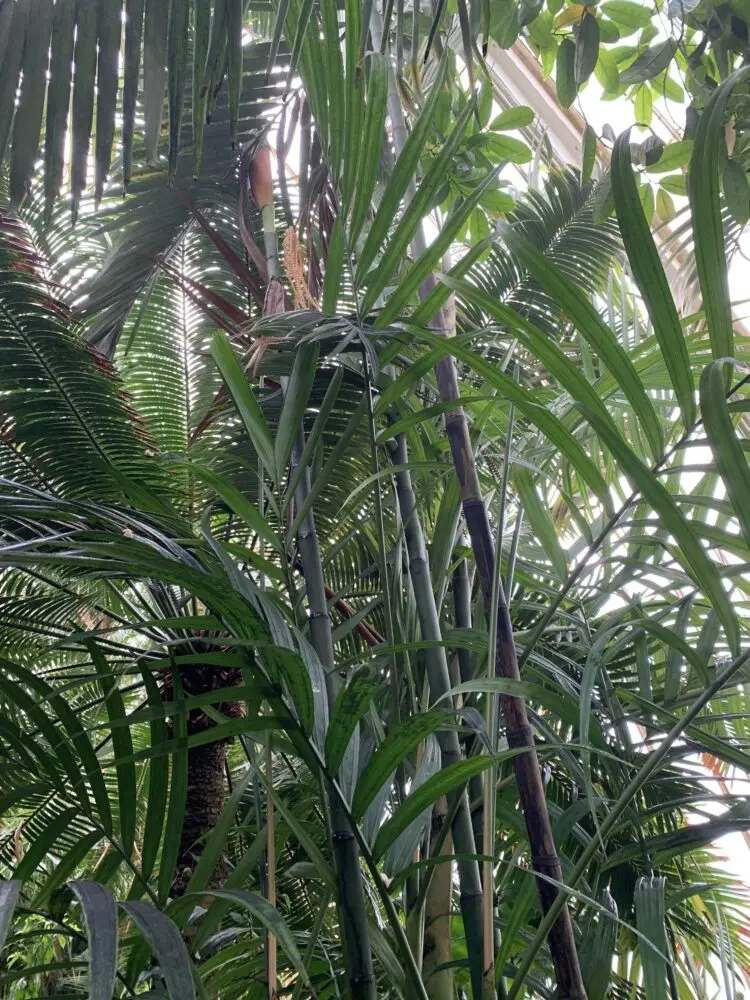
Ecological and Geographic Diversity: Evolution Across Islands and Forests
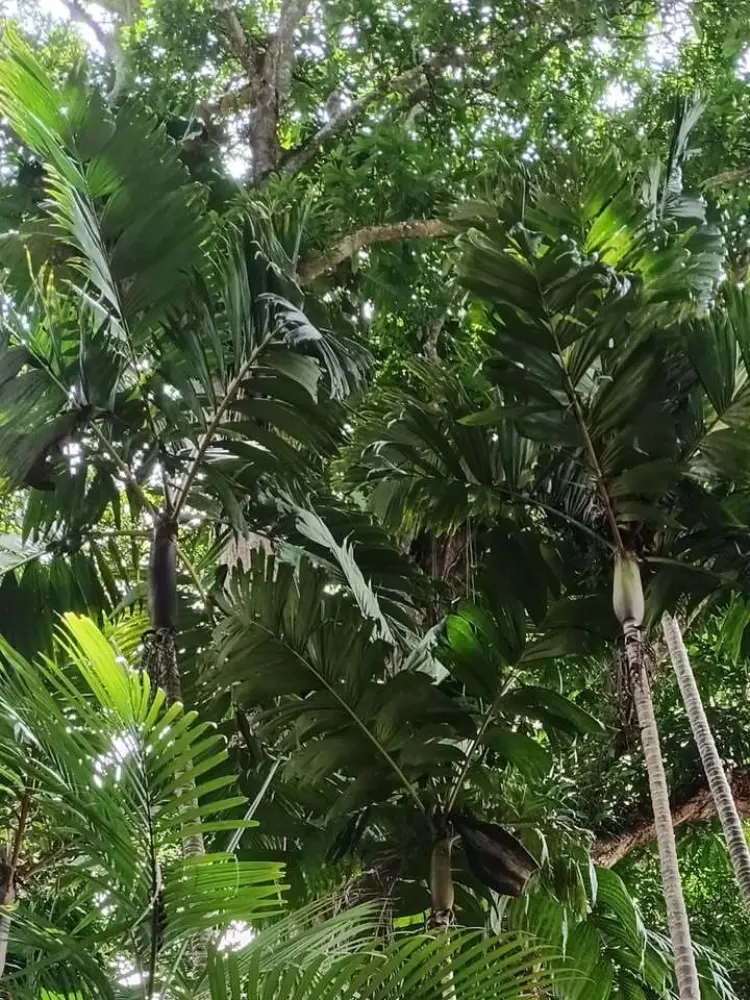
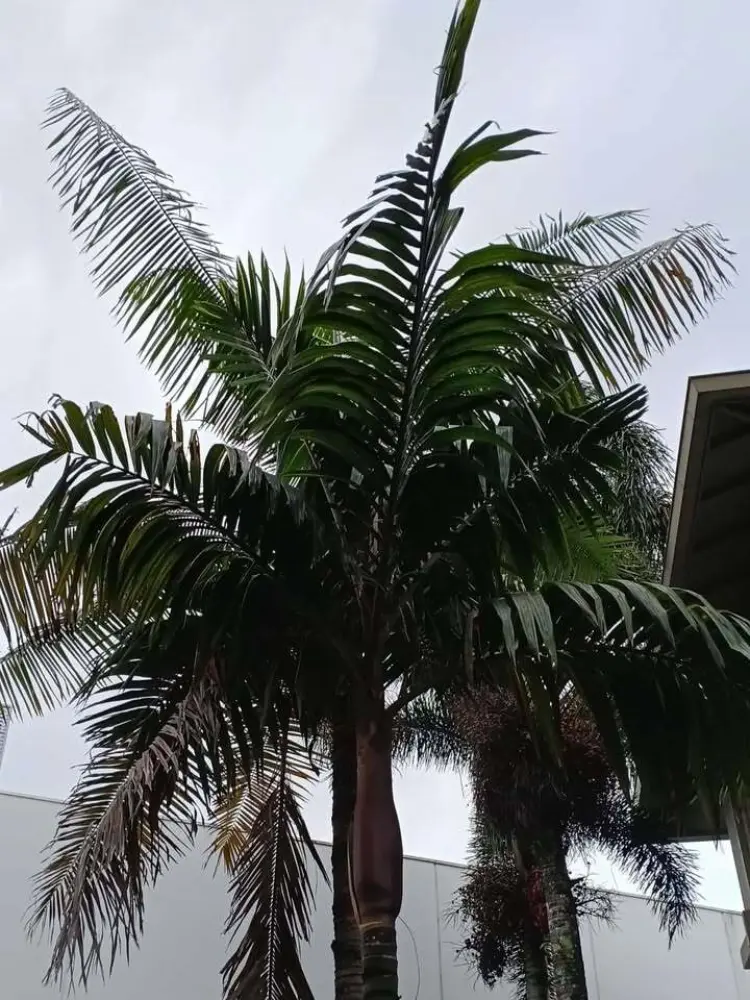
Endemic to the Philippines, this species highlights the importance of island ecosystems in driving palm diversity. Isolation allows species like Pinanga copelandii to evolve independently, producing forms found nowhere else on Earth.
Pinanga insignis | Pinang Black Fibre Palm
This species embodies the delicate elegance of the rainforest understory. Its slender stems and refined crown allow it to blend seamlessly into its surroundings, where subtlety is often the key to survival.
As its name suggests, Pinanga riparia is closely associated with streamside environments. These habitats provide consistent moisture, allowing the species to thrive where water availability remains stable year-round.
Pinanga batanensis | Batan Palm
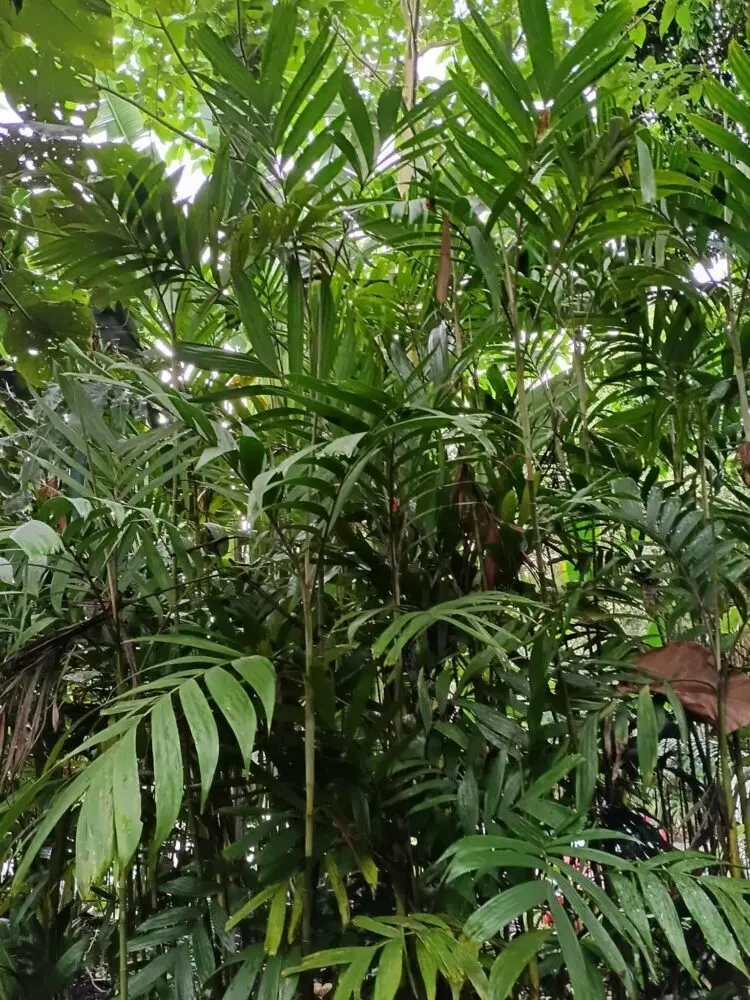
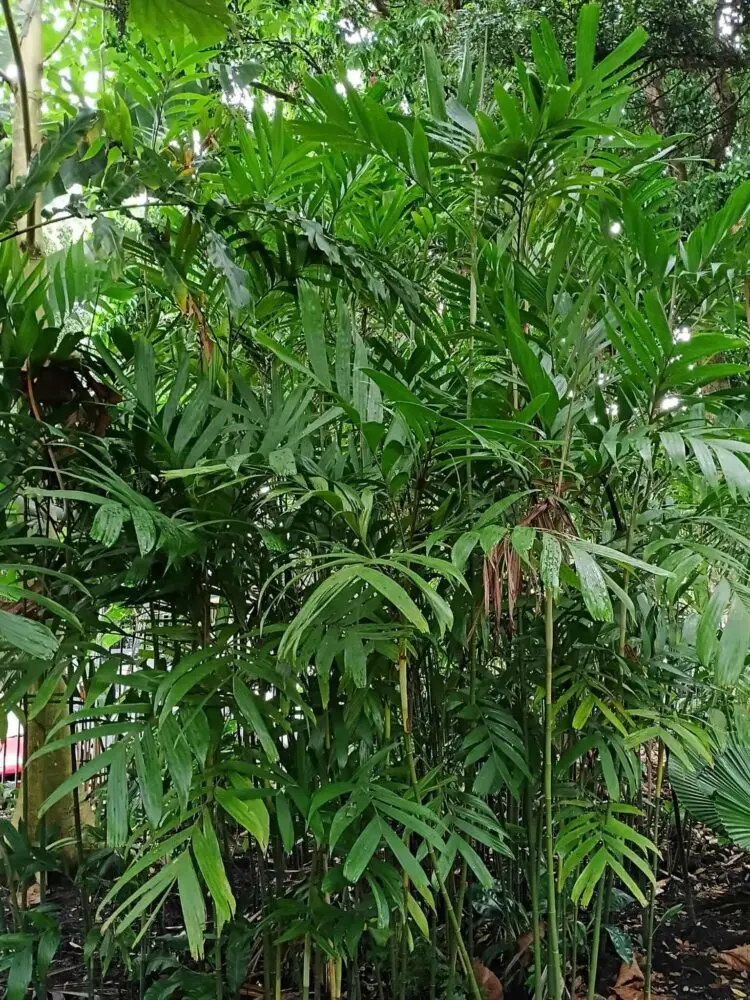
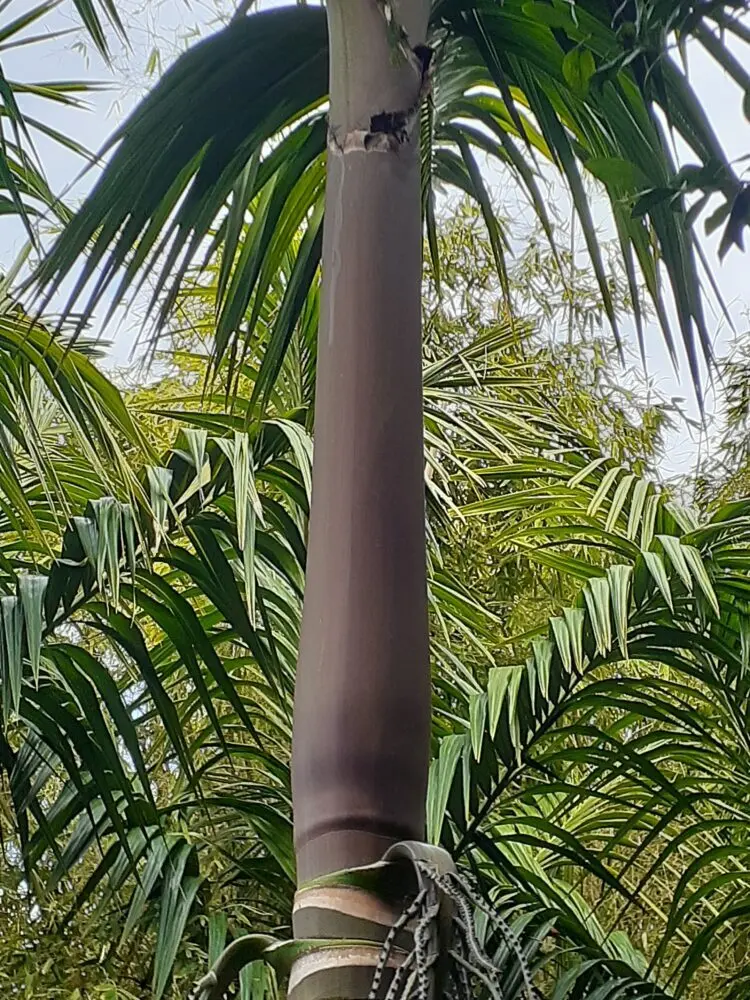
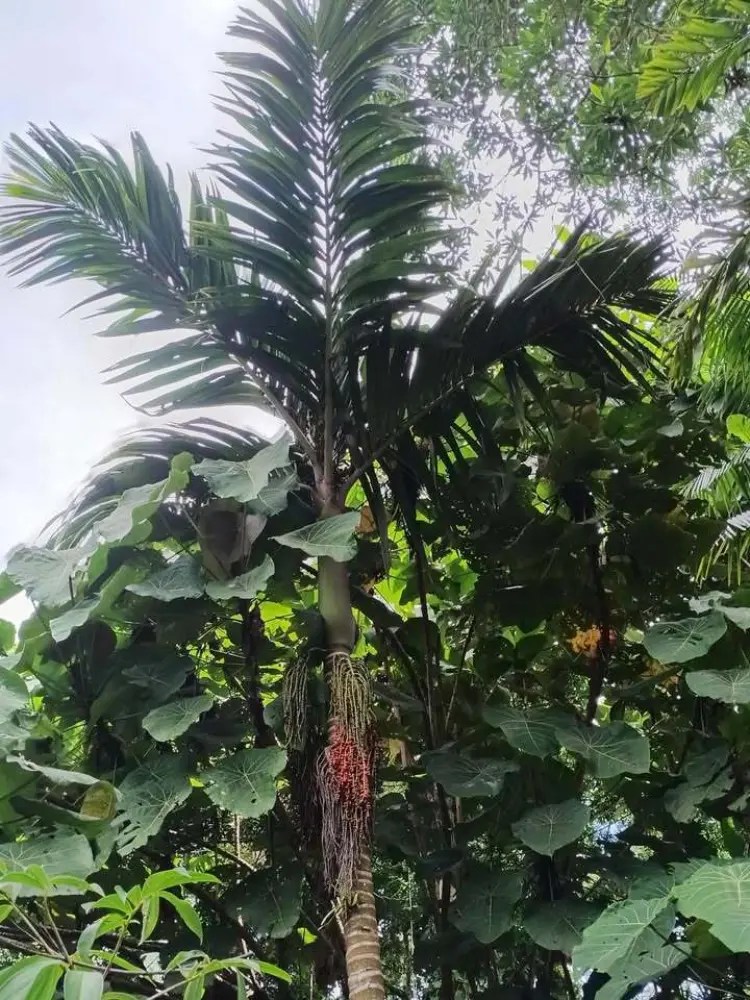
Native to the Batanes Islands of the northern Philippines, this species represents one of the genus’ more geographically isolated members. Island populations such as this often develop unique characteristics over time, shaped by isolation and local conditions.
Closing Thoughts: A Genus of Endless Discovery
With more than 120 described species—and likely many more awaiting formal recognition—Pinanga remains one of the most diverse palm genera in the world. New species continue to be discovered, particularly in remote regions of New Guinea and Southeast Asia, where unexplored rainforest still holds botanical secrets.
Some Pinanga species exist only on a single mountain slope or isolated island. Others grow beside streams that have flowed unchanged for thousands of years. A few have likely never been photographed in cultivation. In botanical gardens, collectors sometimes wait years for a rare Pinanga to produce its first inflorescence, offering confirmation of its identity and maturity.
Perhaps most remarkable is how easily these palms can be overlooked in habitat. While towering canopy palms command attention, Pinanga quietly thrives beneath them—refined, resilient, and endlessly varied.
Share Your Pinanga
Project Palm currently has 36 species from this genus formally described in our Species Library. We are adding new species on a regular basis. We would love to add more and will continue to do so with your support! Each new photograph helps expand our collective understanding of this extraordinary genus.
If you are growing a Pinanga species, or have encountered one in habitat or in a botanical garden, we invite you to log in and share your photos with the Project Palm community. Your contributions help document these species and ensure they are appreciated by enthusiasts everywhere. Simply follow this link to upload your photos. We appreciate your support!
At Project Palm, our mission is simple: to document, celebrate, and share the remarkable diversity of the palm world. With each new species added and each new photograph contributed, we move closer to building the most complete palm species resource ever assembled.
And within that effort, Pinanga stands as one of the most beautiful reminders that even in the quietest corners of the rainforest, extraordinary diversity thrives.
All Pinanga species photos were generously contributed by our members:
Cover photo: Pinanga bicolana, courtesy of Zaki Jamil
Pinanga disticha | Legong Palm, courtesy of David Parker
Pinanga simplicifrons var. simplicifrons, courtesy of David Parker
Pinanga veitchii, courtesy of Ali Ahmed
Pinanga maculata | Tiger Palm, courtesy of David Parker, Erich von Unruh
Pinanga caesia, courtesy of David Parker
Pinanga coronata | Ivory Cane Palm, courtesy of William Chang, Kevin Connor, Tad Collister
Pinanga speciosa | Violet Crownshaft Palm, courtesy of Erich von Unruh
Pinanga sylvestris | Chocolate Cane Palm, courtesy of Matthew Pearson, Kevin Connor
Pinanga copelandii, courtesy of David Parker
Pinanga insignis | Pinang Black Fibre Palm, courtesy of David Parker
Pinanga riparia, courtesy of David Parker
Pinanga batanensis | Batan Palm, courtesy of William Chang, David Parker