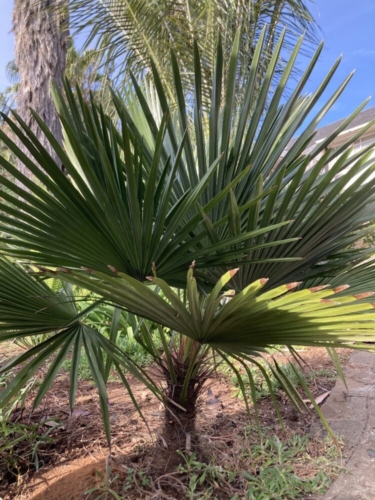
If you've searched for this beautiful South American palm, you've probably encountered two different names: Trithrinax acanthocoma and Trithrinax brasiliensis var. acanthocoma. So which one is correct?
The answer depends on when you opened your botany book.
One of the most fascinating aspects of botanical science is that plant names are not carved in stone. As botanists gather new information—from field observations and herbarium specimens to modern DNA analyses—our understanding of how species are related continues to evolve. Few palms illustrate that process better than Trithrinax brasiliensis var. acanthocoma.
1837 – The Story Begins
Long before acanthocoma entered the scientific literature, German botanist Carl Friedrich Philipp von Martius established the genus Trithrinax in his monumental work Historia Naturalis Palmarum. In 1837 he described Trithrinax brasiliensis, a palm native to southern Brazil, Paraguay, and neighboring regions. For decades, this represented the foundation of the genus.
1878 – A New Species is Described
In 1878, German botanist Carl Georg Oscar Drude examined palms that appeared sufficiently distinct from Trithrinax brasiliensis to warrant recognition as an entirely new species. He described the plant as Trithrinax acanthocoma, noting characteristics that separated it from the previously known species. His description was later expanded in Flora Brasiliensis, where material collected by the French botanist Auguste François Marie Glaziou served as the basis for the concept of the species.
For well over a century, many palm enthusiasts and botanists knew this palm simply as Trithrinax acanthocoma.
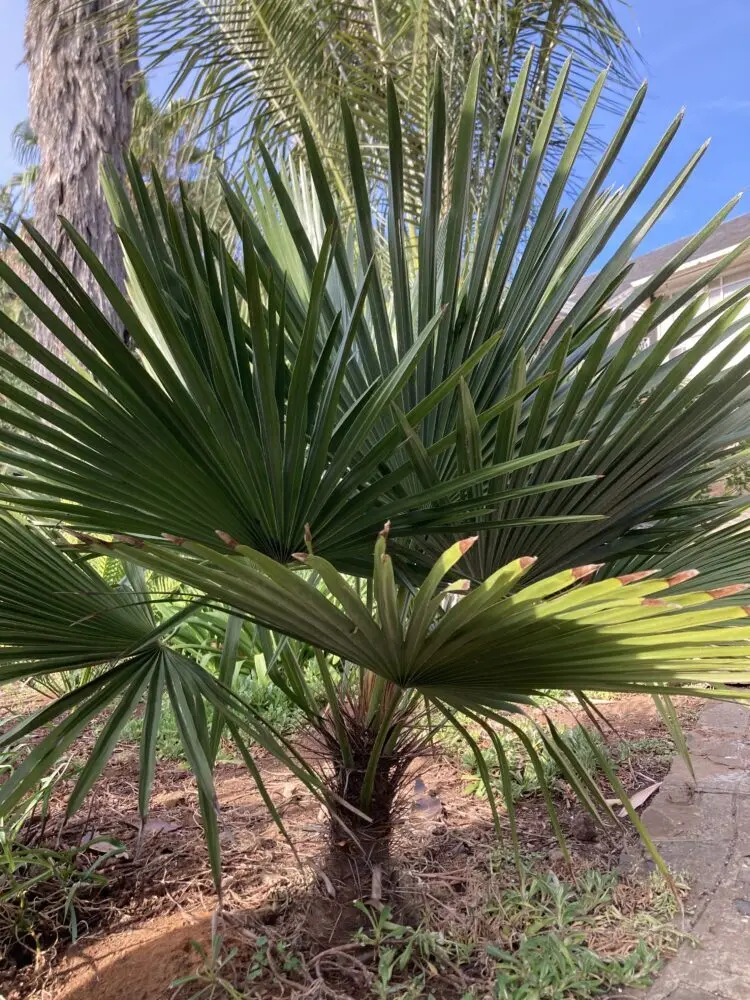
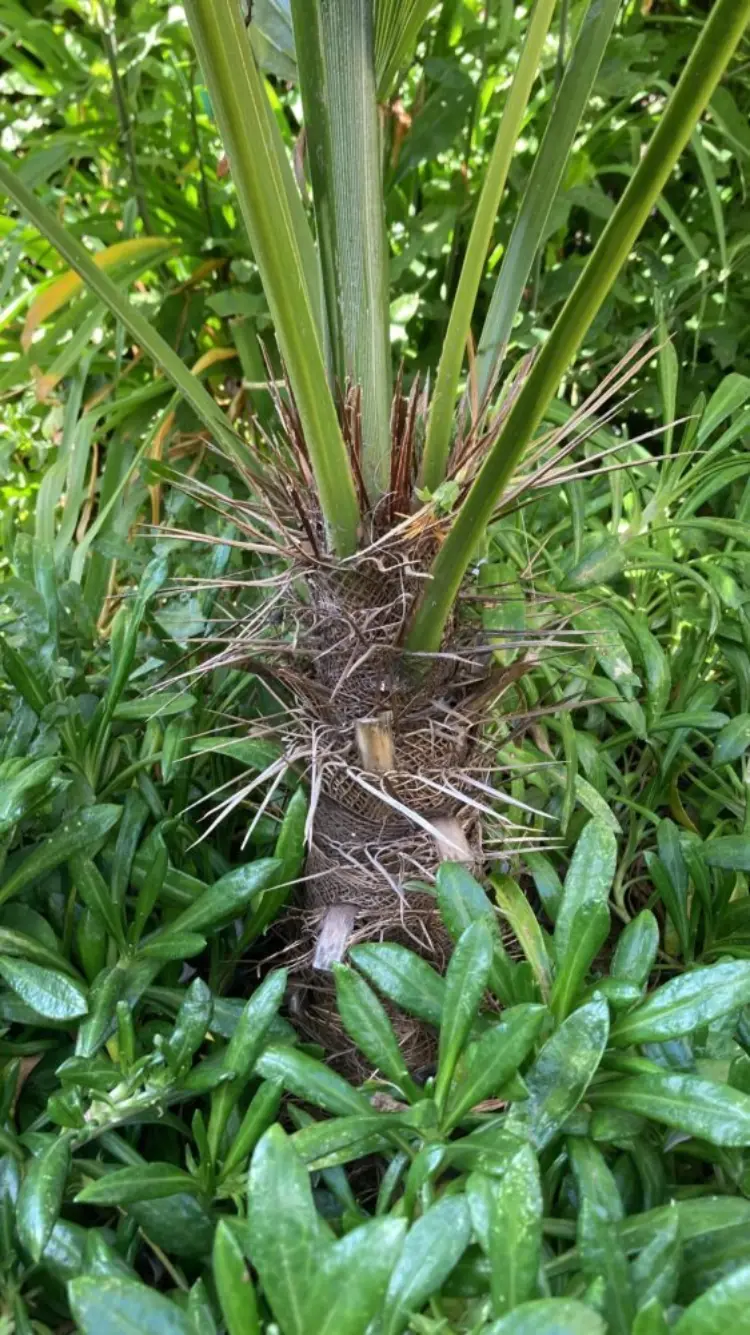
Trithrinax brasiliensis var. acanthocoma | Brazilian Needle Palm
Photos courtesy of Marius Jansen
1977 – A Different Perspective
As additional specimens became available and botanists compared palms across a wider geographic range, some researchers began to see the differences between Trithrinax acanthocoma and Trithrinax brasiliensis as less significant than originally believed.
In 1977, Brazilian botanist João Rodrigues de Mattos proposed treating Drude's species as a variety rather than a separate species, creating the combination:
Trithrinax brasiliensis var. acanthocoma (Drude) Mattos
This change suggested that the palm represented a distinctive regional form of Trithrinax brasiliensis, rather than an entirely separate evolutionary lineage.
2010 – The Debate Continues
Taxonomy is rarely unanimous.
In their landmark book Brazilian Flora: Arecaceae (Palms), Harri Lorenzi, Larry Noblick, Francis Kahn, and Evandro Ferreira continued to recognize Trithrinax acanthocoma as a distinct species. This demonstrates an important point about botanical science: different experts can evaluate the same evidence and reach different conclusions.
2013 – Modern Evidence Brings New Consensus
A comprehensive revision of the genus by Ángela Cano, Mathieu Perret, and Fred W. Stauffer brought together an extraordinary amount of evidence.
Rather than relying on a handful of specimens, the researchers studied natural populations across South America, examined herbarium collections from around the world—including the original type material—reviewed historical literature, and incorporated molecular phylogenetic data. After evaluating all of the evidence, they concluded that the genus was best interpreted as containing three species and four varieties, recognizing Trithrinax brasiliensis var. acanthocoma as the accepted name.
Today, this treatment is followed by major taxonomic references including Kew's Plants of the World Online.
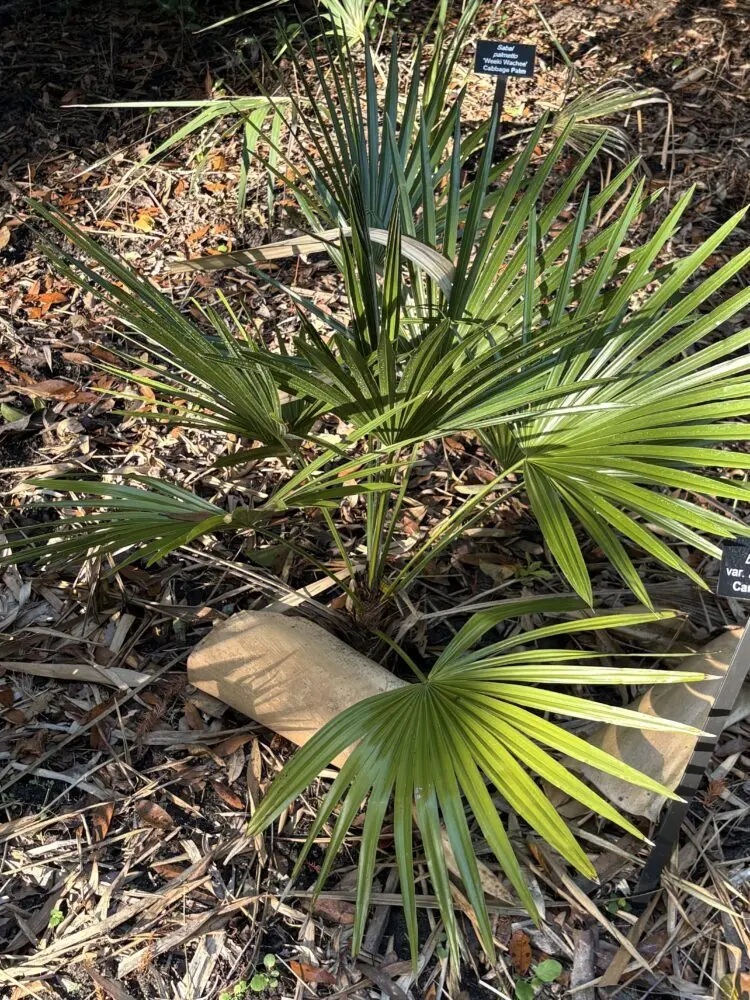
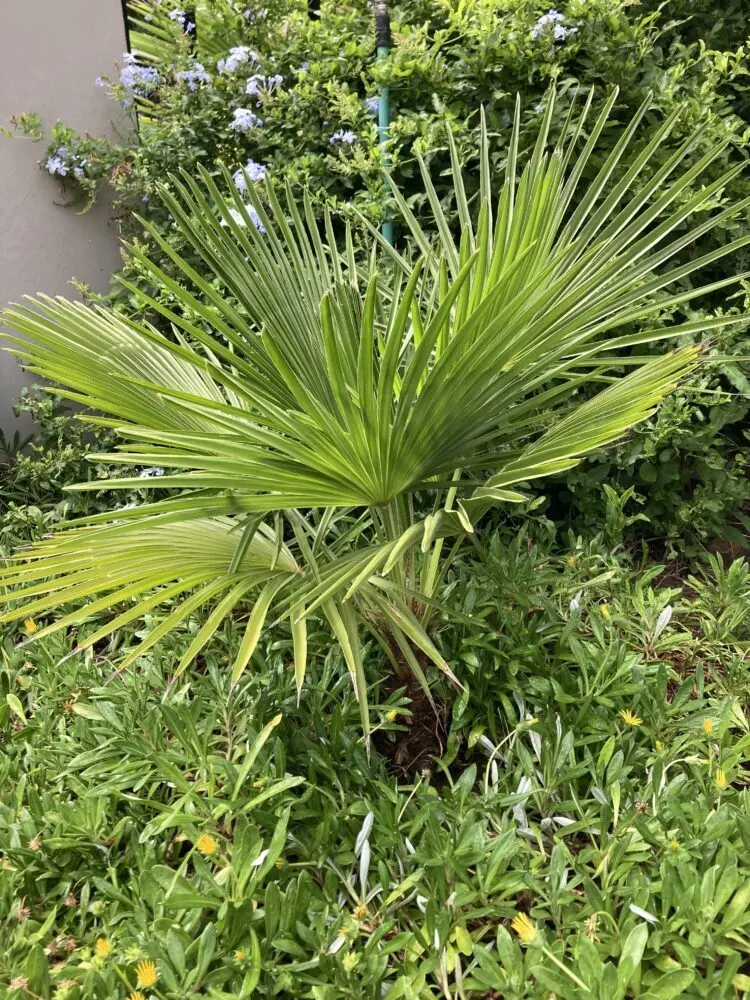
Trithrinax brasiliensis var. acanthocoma | Brazilian Needle Palm
Photos courtesy of Kevin Connor, Marius Jansen
Why Does This Matter?
At first glance, changing a species into a variety might seem like a minor technical adjustment.
In reality, it reflects a much deeper scientific conclusion.
A species is generally considered to represent a distinct evolutionary lineage, while a variety recognizes a population with consistent differences that still falls within the natural variation of the species. By recognizing acanthocoma as a variety, botanists acknowledge its distinctive characteristics while concluding that it is most appropriately treated as part of the broader Trithrinax brasiliensis complex.
A Living History of Botanical Science
The journey of this remarkable palm—from Trithrinax acanthocoma, to Trithrinax brasiliensis var. acanthocoma, through decades of differing opinions, and finally to its current acceptance—illustrates how botanical science continually refines our understanding of the natural world.
Every scientific name carries a story. Sometimes that story spans centuries, involves botanists from several countries, and reminds us that science is never truly finished. As new discoveries are made, today's accepted name may one day become another fascinating chapter in the history of palms.
Continue Your Palm Journey
We invite you to continue exploring in the Species Library, where you'll find over 900 palm species from around the world, complete with descriptions, cultivation tips, and thousands of photographs generously shared by members of the global palm community.
Our library continues to grow as we research, write, and publish new species descriptions on a regular basis. And you can help.
Are you growing Trithrinax brasiliensis var. acanthocoma?
Have you traveled to an area and photographed one in habitat?
Have you visited a botanical garden with one on display?
If so, we'd love to showcase your images.
Simply create a free Project Palm account and upload your photos to help build one of the world's most comprehensive online resources dedicated to the palm family one species, one photo, and one story at a time.