A Historical Look at the Discovery of the Palm Family
Palm trees are among the most recognizable plants on Earth. From tropical beaches to rainforest canopies, their graceful trunks and sweeping crowns have fascinated explorers and botanists for centuries. Yet despite their familiarity, the full diversity of palms remained largely unknown until relatively recently in botanical history.
Today botanists recognize more than 2,600 species of palm trees worldwide, all belonging to the plant family Arecaceae, making the palm family one of the most diverse groups of tropical plants. These species occur across tropical and subtropical regions of the world, ranging from towering rainforest giants to small understory palms and even climbing rattans.
But scientists did not always know that palms were so diverse. The number of recognized species has grown steadily over the past three centuries as explorers ventured deeper into tropical forests and botanists refined the science of plant classification.
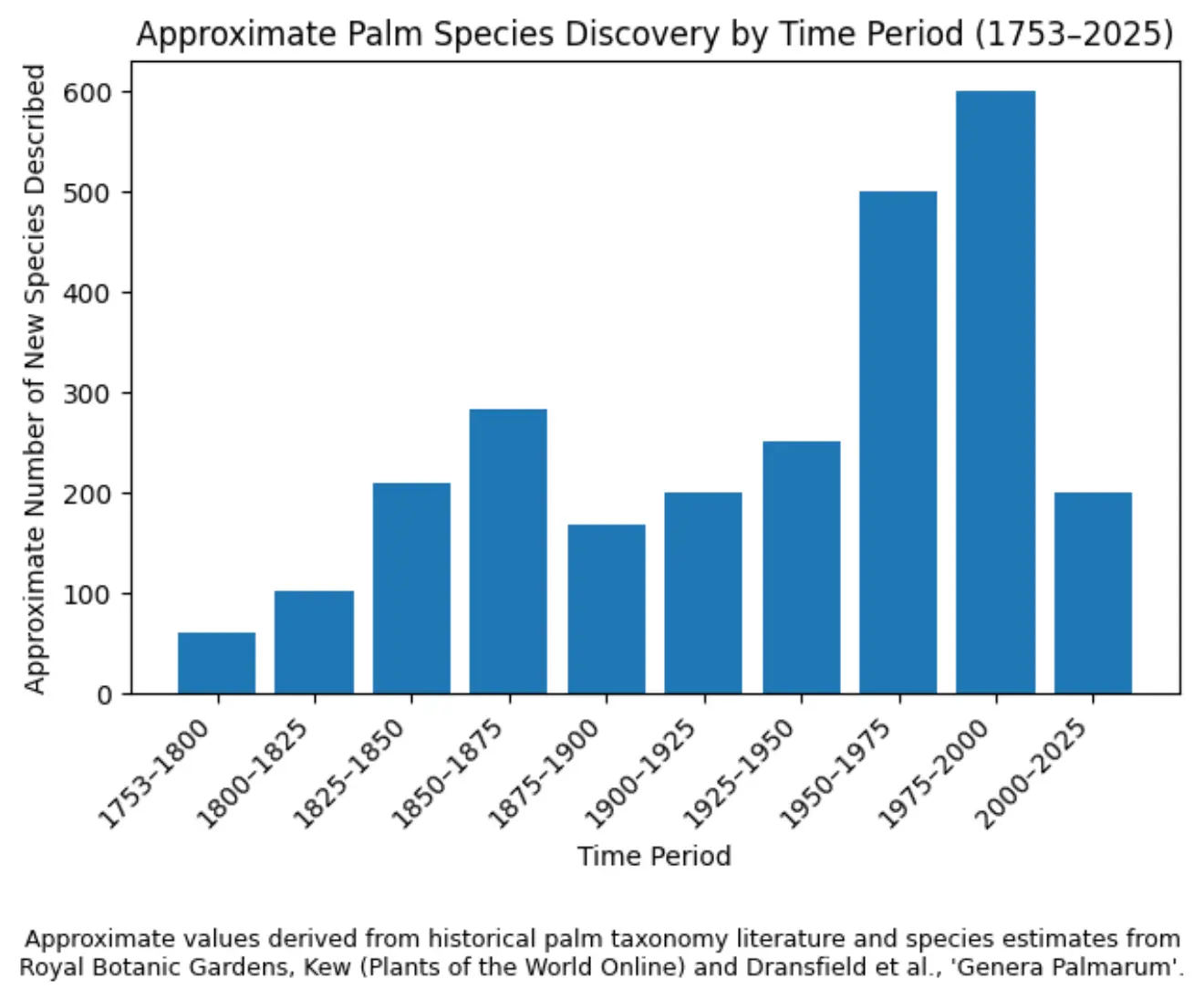
Approximate species discovery values derived from historical palm taxonomy literature and species estimates from the Royal Botanic Gardens, Kew (Plants of the World Online) and Dransfield et al., Genera Palmarum: The Evolution and Classification of Palms.
• Royal Botanic Gardens, Kew — Plants of the World Online (POWO)
• Dransfield, Uhl, Asmussen, Baker, Harley & Lewis — Genera Palmarum: The Evolution and Classification of Palms
The Early Era of Palm Classification
The scientific study of palms began in earnest in the 18th century when Swedish botanist Carl Linnaeus published his landmark work Species Plantarum in 1753. At the time, only about 30 palm species were formally described, reflecting the limited botanical knowledge of tropical ecosystems.
During the late 1700s and early 1800s, European exploration expanded into the Caribbean, South America, and Southeast Asia. Botanical expeditions collected thousands of plant specimens, including many previously unknown palms.
By the mid-19th century, the number of known palm species had increased dramatically as colonial botanical gardens and herbaria began cataloging tropical plants.
The Explosion of Palm Discoveries
The late 19th and early 20th centuries represented a golden age of palm discovery. Botanists such as Odoardo Beccari conducted extensive expeditions across Southeast Asia and the Pacific, documenting many remarkable palm species.
By 1900, botanists had identified roughly 850 species of palms, and the number continued to grow as scientific exploration expanded across the tropics.
Advances in plant taxonomy and global herbarium collections pushed the number of recognized species to more than 1,300 by the mid-20th century.
Modern Palm Taxonomy
In recent decades, the study of palms has been transformed by improved field access to remote forests and by modern scientific techniques.
Molecular DNA analysis now allows botanists to better understand evolutionary relationships within the palm family. This has led to the discovery of new species and, in some cases, the reclassification of existing ones.
Today the palm family Arecaceae contains more than 2,600 recognized species, and new discoveries continue to be described from remote regions of the world.
Notable Palm Species Discoveries through the years
1753–1800
Cocos nucifera | Coconut Palm
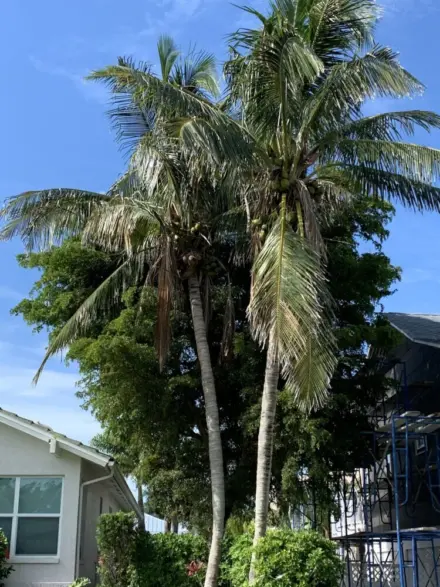
The coconut palm was formally described in 1753 by Carl Linnaeus in his groundbreaking work Species Plantarum, which established the modern system of botanical naming. Although the species had been cultivated and used for thousands of years across tropical coastal regions, Linnaeus’s description marked its formal entry into scientific classification. Native to tropical shorelines of the Indo-Pacific region, the coconut palm became one of the most economically and culturally important palm species in the world.
1800–1825
Lodoicea maldivica | Coco de Mer
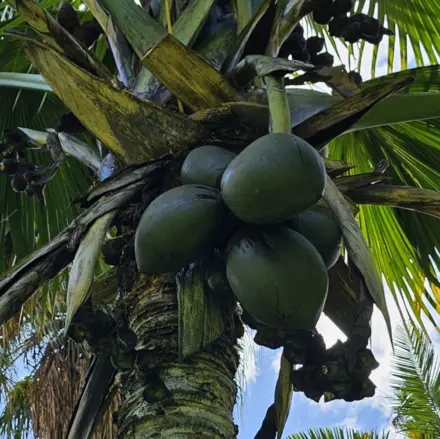
The coco de mer palm of the Seychelles fascinated naturalists for centuries because its enormous seeds—the largest in the plant kingdom—sometimes drifted across the Indian Ocean long before botanists knew where the plant grew. The species was formally described in 1807 by French botanist Jean-Baptiste Bory de Saint-Vincent, and by the mid-19th century explorers had documented its native habitat on the islands of Praslin and Curieuse in the Seychelles. The palm remains one of the most famous and visually striking species in the family Arecaceae.
1910–1925
Raphia regalis — The Palm with the Largest Leaves in the World
Raphia regalis was described in 1910 by German botanist Odoardo Beccari from specimens collected in the rainforests of Cameroon and Central Africa. This remarkable palm is famous for producing the largest leaves of any plant in the world, with individual fronds that can exceed 25 meters (80 feet) in length. Unlike many palms, it grows with a short trunk while its enormous leaves spread outward through the forest canopy. The discovery of such an extraordinary species highlighted the immense botanical diversity of the tropical forests of Central Africa.
2000–2025
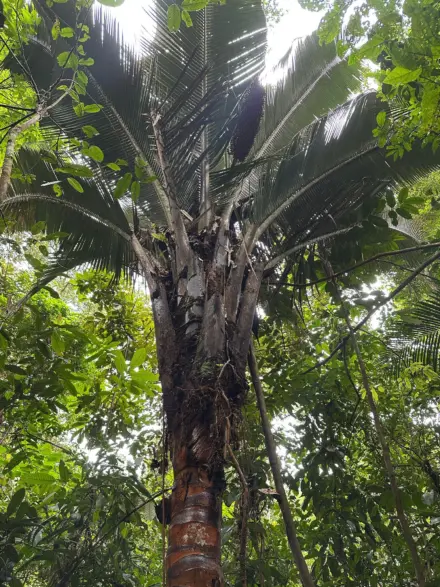
Attalea Taam | táam
The palm Attalea taam was formally described in 2024 by botanist Juan Carlos Copete Maturana and collaborators following botanical surveys in the Colombian Amazon. The discovery highlights that new palm species continue to be identified even today, particularly in tropical regions where palm diversity is exceptionally high. Like many recently described species, Attalea taam was recognized after careful comparison with closely related palms already known from the region.
Where Most Palm Species Are Found
From the rainforests of Southeast Asia to the Amazon Basin and the islands of the western Pacific, palm trees thrive in warm climates around the globe. This map shows where native palm species are found and highlights the regions that host the greatest diversity.
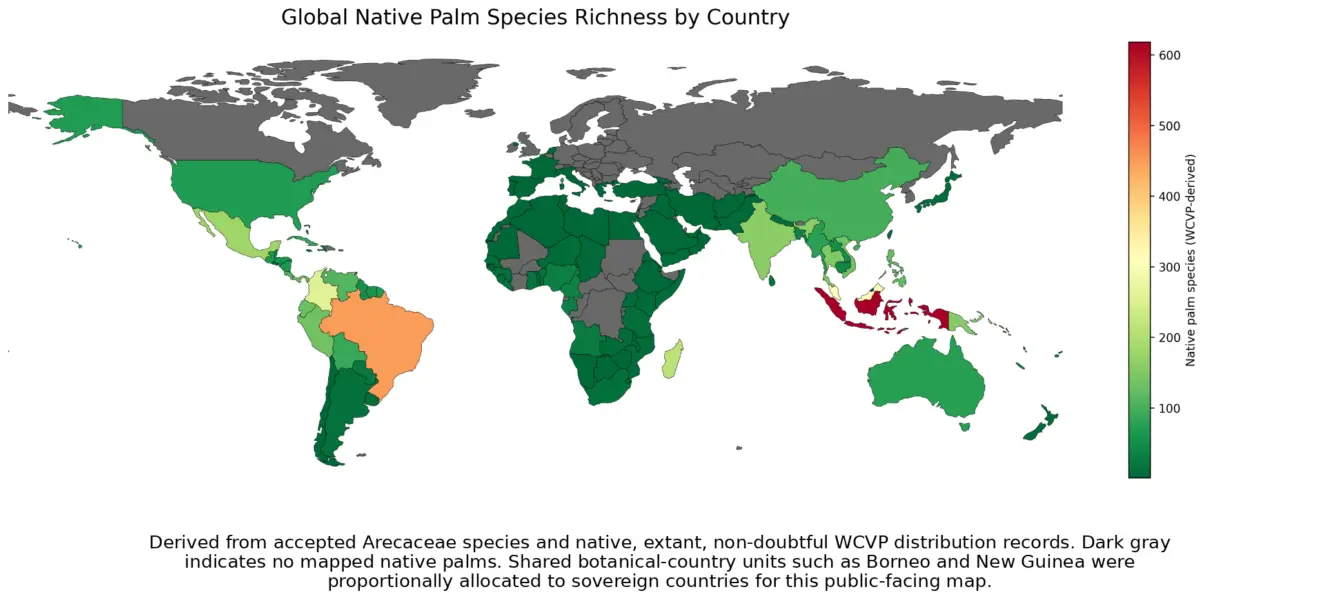
Native palm species richness by country derived from the World Checklist of Vascular Plants (WCVP). Counts include accepted, native, extant palm species; shared botanical regions such as Borneo and New Guinea were proportionally allocated to countries.
One of the most striking insights from this map is just how concentrated global palm diversity really is. While more than 2,600 palm species are known worldwide, the majority occur within a relatively small number of tropical countries. Island regions such as Borneo and New Guinea are particularly remarkable, hosting extraordinary palm diversity despite their limited land area. Madagascar also stands out as one of the world’s most unique palm hotspots, with many species found nowhere else on Earth. At the other end of the spectrum, some countries support only a single native palm species, illustrating how sharply palm diversity declines outside the tropics. These patterns highlight the importance of tropical forests and island ecosystems as centers of palm evolution and biodiversity.
While the map reveals the global pattern of palm diversity, a closer look at the numbers shows just how concentrated these species are in a handful of tropical countries.
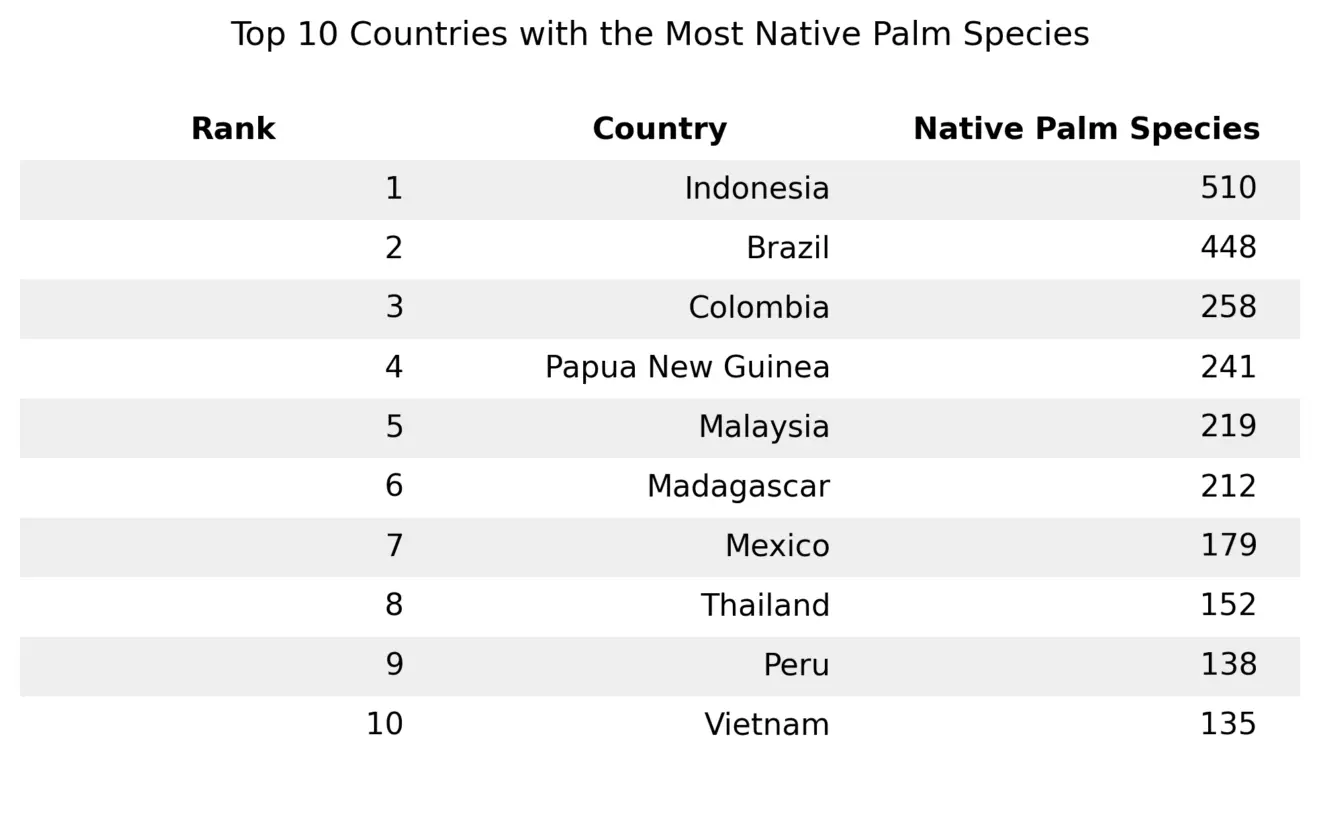
Remarkably, just ten countries contain well over half of the world’s known palm species.
Why New Palm Species Are Still Being Discovered
Despite centuries of research, new palm species are still being identified today. Several factors contribute to these ongoing discoveries:
- Remote tropical forests remain poorly explored
- Some species occur in extremely small geographic ranges
- Genetic analysis reveals hidden diversity within known groups
- Taxonomic revisions clarify previously misunderstood species
Recent discoveries demonstrate that the palm family is still revealing new secrets to botanists and plant enthusiasts alike.
Although botanists have described thousands of palm species, discoveries continue in tropical forests around the world. Each new species helps scientists better understand how palms evolved and how biodiversity is distributed across the planet.
The Mission of Project Palm
At Project Palm, our goal is to document the extraordinary diversity of the palm family through a growing global species library.
The platform currently includes more than 860 documented palm species, each illustrated with photographs and botanical information contributed by members around the world. Our community continues to expand this library with new species pages and field photographs.
As we approach the milestone of 900 documented species by International Palm Day, Project Palm is helping create one of the most comprehensive visual palm databases available online.
Have a palm photo you'd like to share? It's simple and easy to do.
Explore the Palm Species Library
Want to explore the incredible diversity of palms?
Visit the Project Palm Species Library to discover palms from around the world—from towering rainforest species to rare palms found only on isolated islands.
🌴 Explore the collection at ProjectPalm.net