| Climate Zone | 11 |
| Min Temp (F/C) | Over 40 F / Over 4 C |
| Leaf Type | Pinnate |
| Height | 20 Ft / 6 M |
| Growth Rate | Slow to Moderate |
| Conservation Status |
Least Concern
|
| Habit | Clustering |
| Soil pH | 6.0-6.9 (Near neutral) |
| Soil Type | Loamy |
Salacca wallichiana
Sizes
- 1 gallon
About Salacca wallichiana
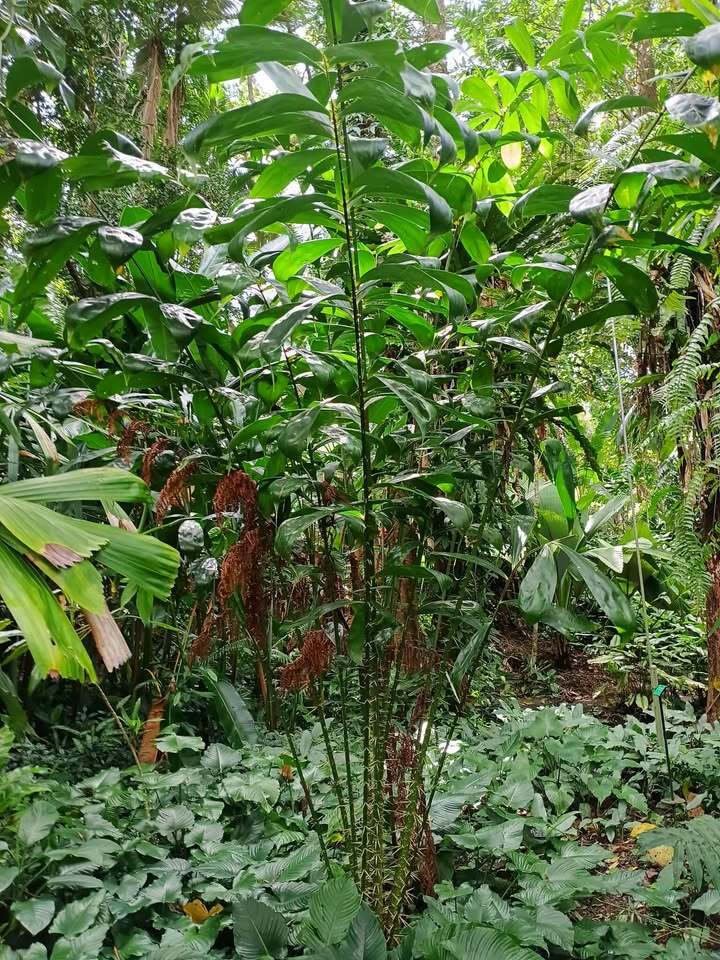
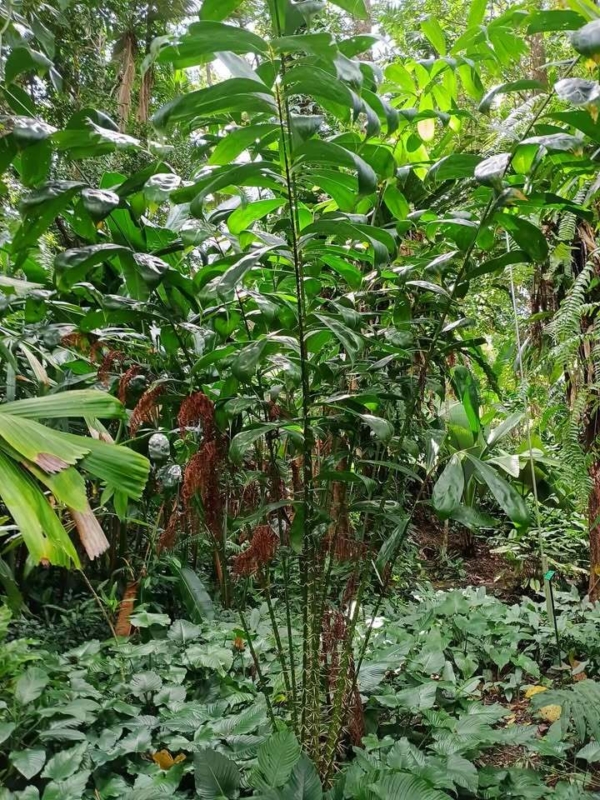
This is a clustering, short-stemmed palm that forms dense thickets of trunks which are often hidden beneath a mass of fibrous leaf bases and protective spines. The palm’s crown is made up of gracefully arching, pinnate leaves with slender, dark green leaflets arranged in an orderly, fishbone pattern; petioles and rachises are lined with stout black spines that serve as both protection and climbing deterrent. Inflorescences emerge near ground level and are dioecious, with male and female flowers produced on separate plants; the flowers are often hidden among the lower foliage and are pollinated by beetles and wind. Its fruit is ovoid to pear-shaped with reddish-brown, scaly skin and translucent, juicy flesh with a sweet-and-sour flavor—highly prized in Southeast Asia and often sold in local Thai markets.
This species is cultivated for its fruit but is rare in ornamental landscapes due to its spines and need for consistent tropical conditions.
Cultivation Tips
This palm prefers a humid, sheltered garden location where it can form thickets without interfering with walkways or other plantings. It grows best in filtered light or dappled shade when young but can transition to full sun in tropical climates as it matures. Plant it in rich, loamy soil with high organic content and excellent moisture retention—mulching around the base can help retain soil humidity. Water consistently to keep the soil evenly moist, especially during flowering and fruiting periods; this species does not tolerate drought. Apply a potassium-rich fertilizer every two to three months during the growing season to support healthy fruit production and dense clump formation.