| Climate Zone | 10b |
| Min Temp (F/C) | 35 to 40 F / 2 to 4 C |
| Leaf Type | Pinnate |
| Height | 37 Ft / 12 M |
| Growth Rate | Moderate |
| Conservation Status |
Critically Endangered
|
| Crownshaft | Yes |
| Habit | Solitary |
| Soil pH | 6.0-6.9 (Near neutral) |
| Soil Type | Loamy |
Dictyosperma album var. album
Hurricane Palm
Sizes
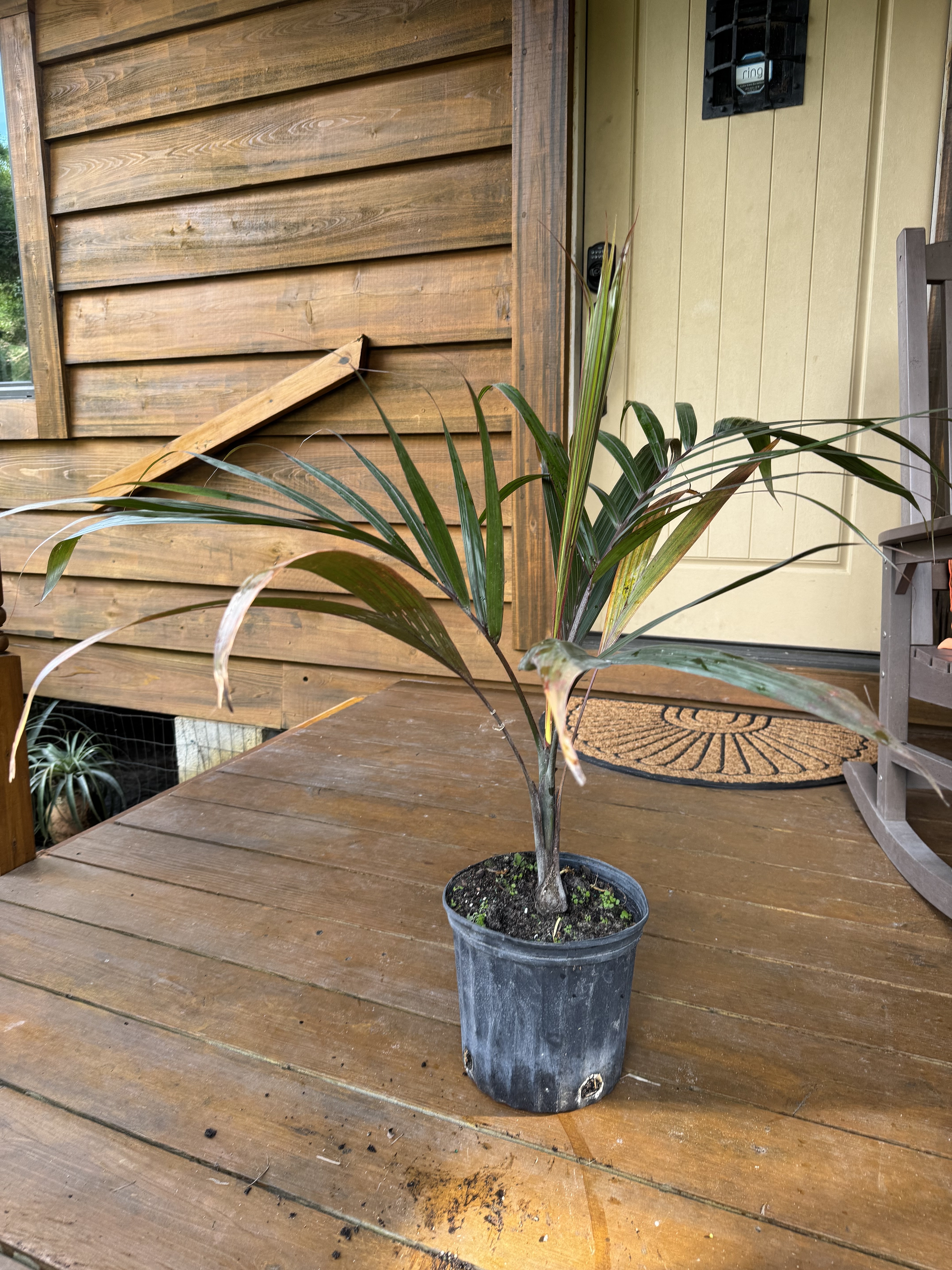
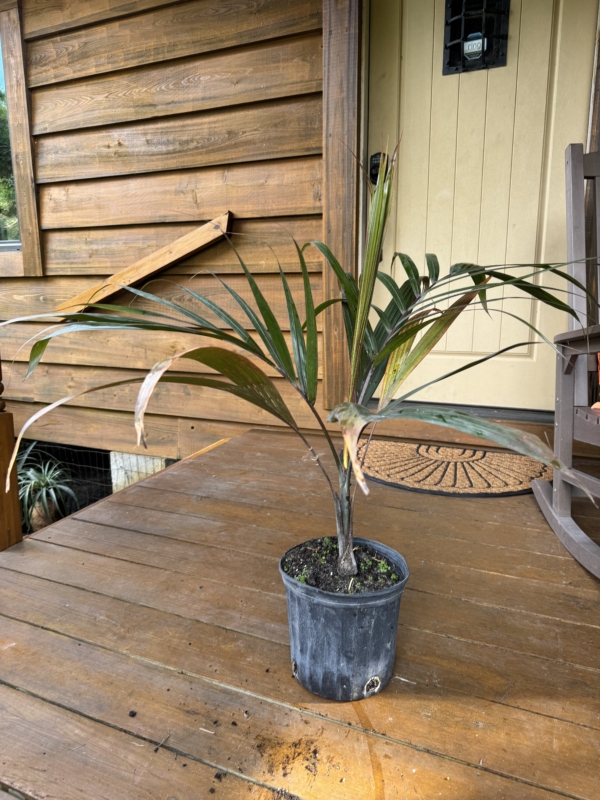
- 3 gallon
About Dictyosperma album var. album
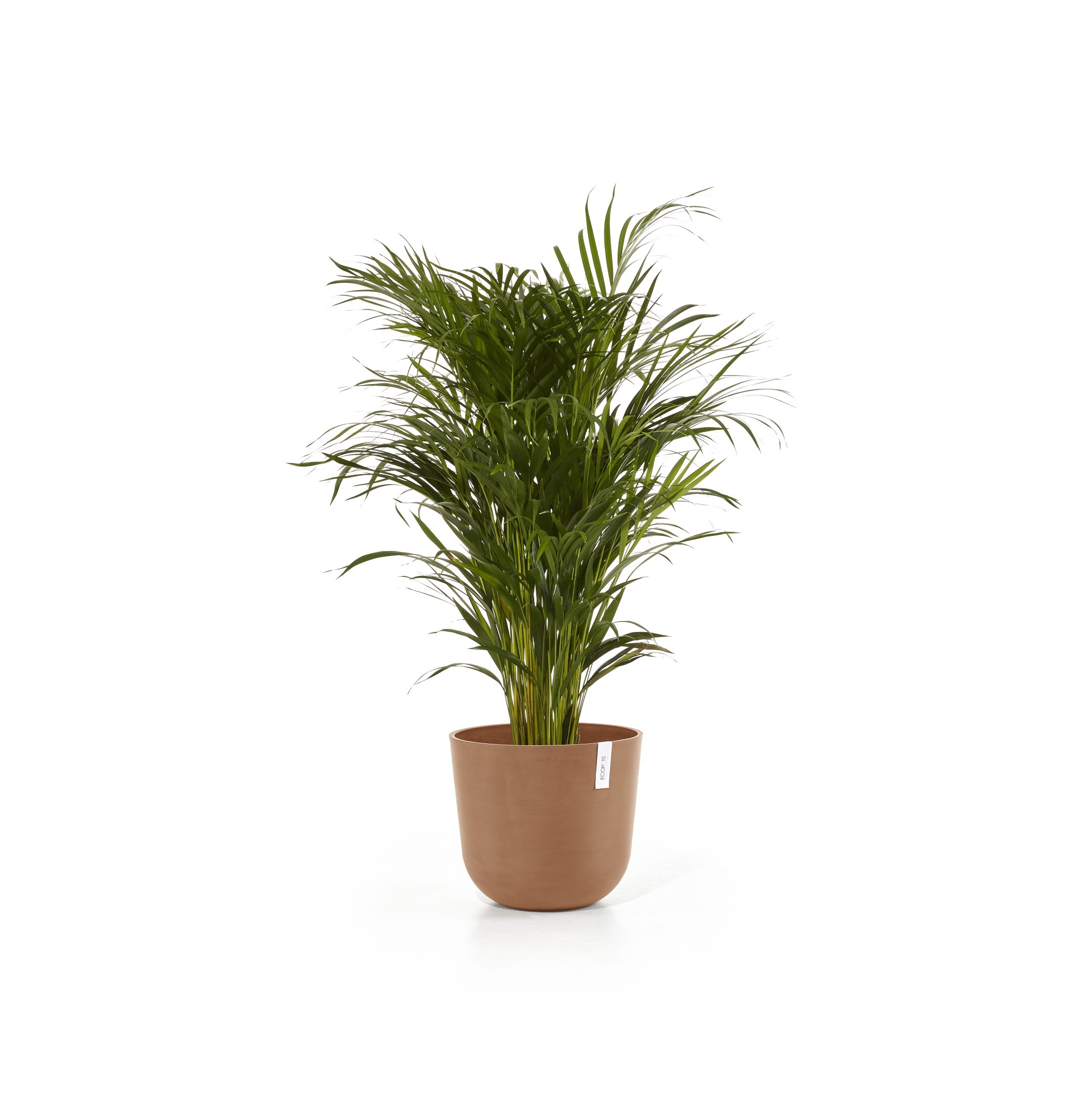
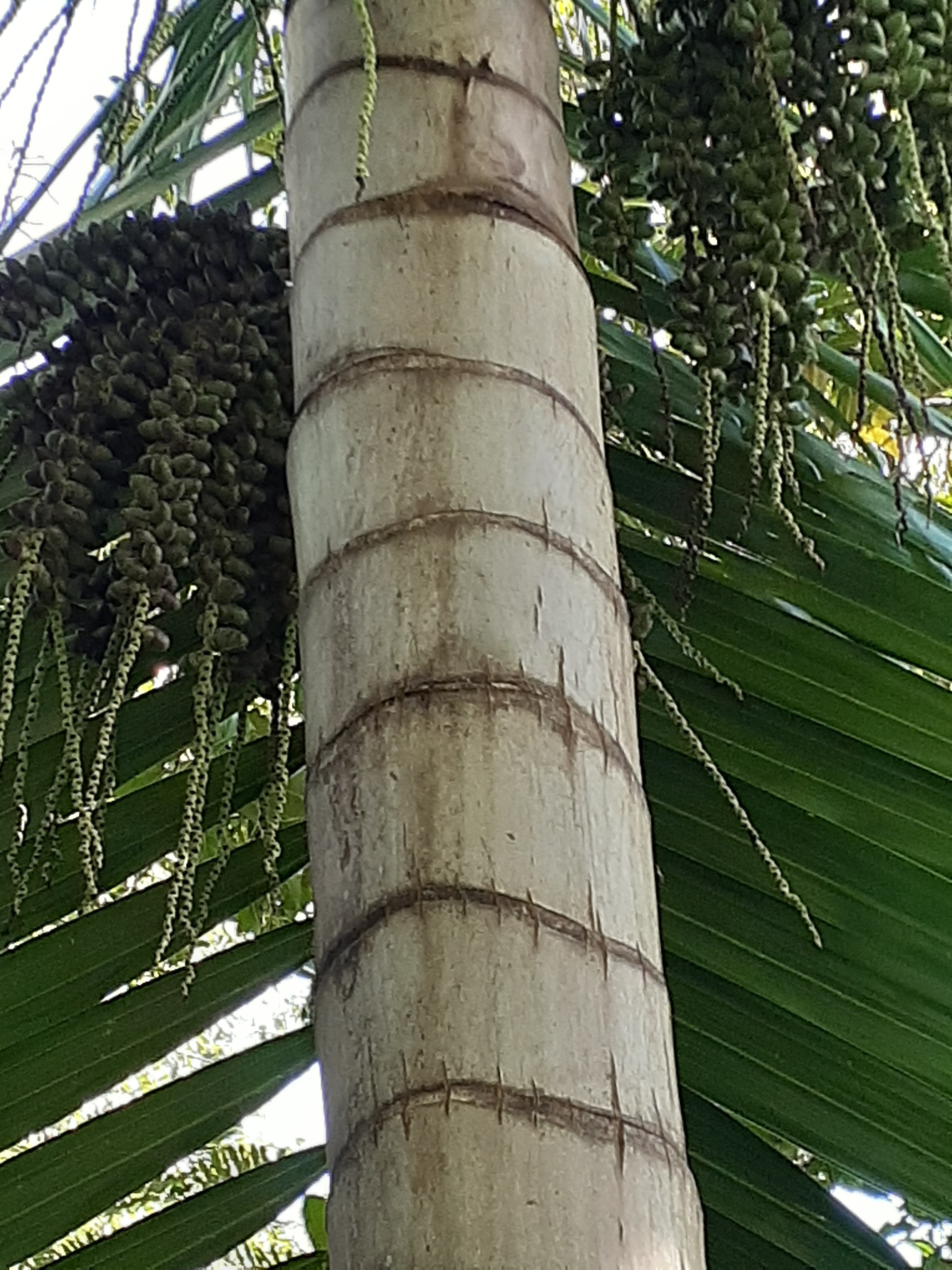
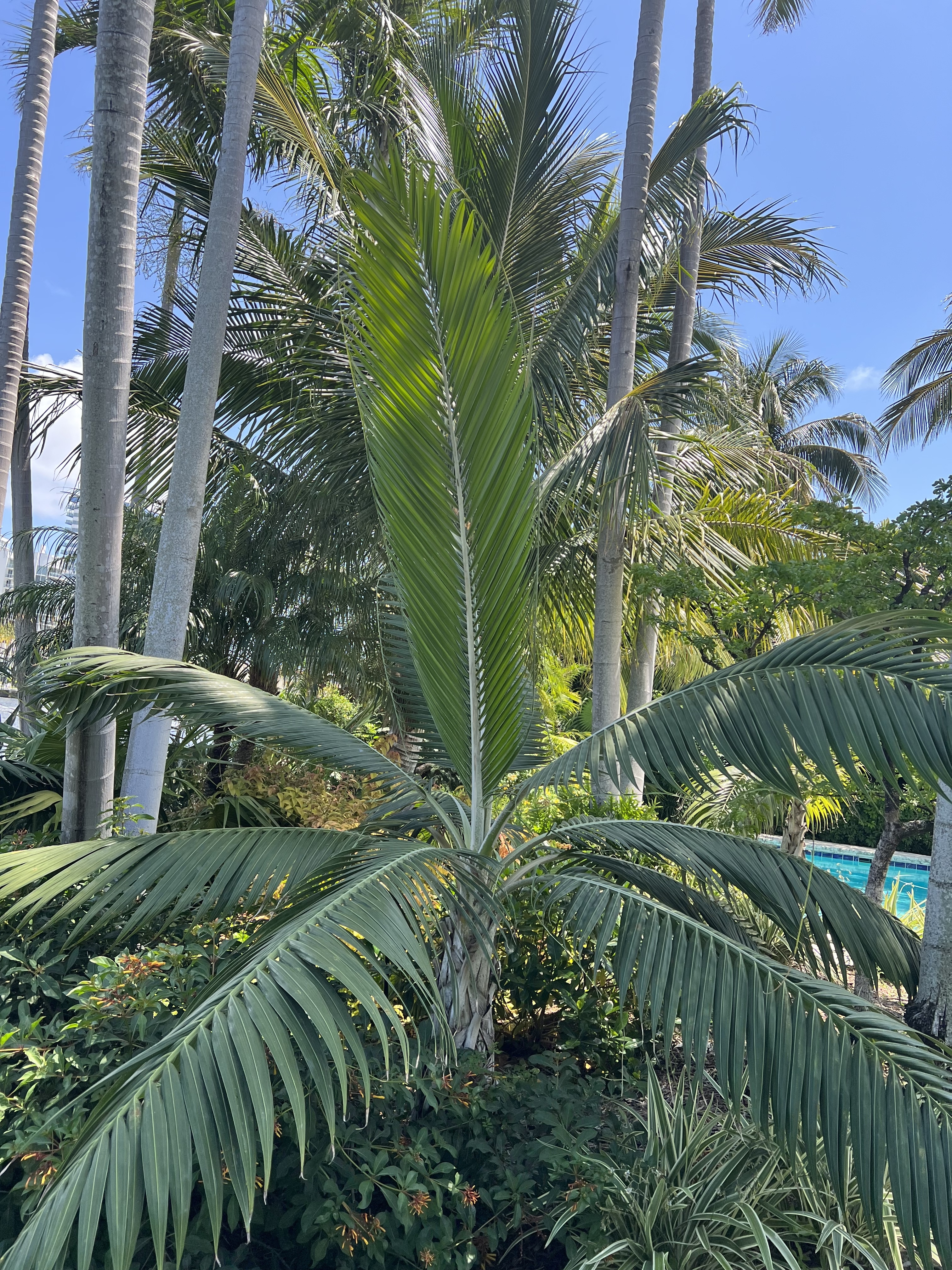
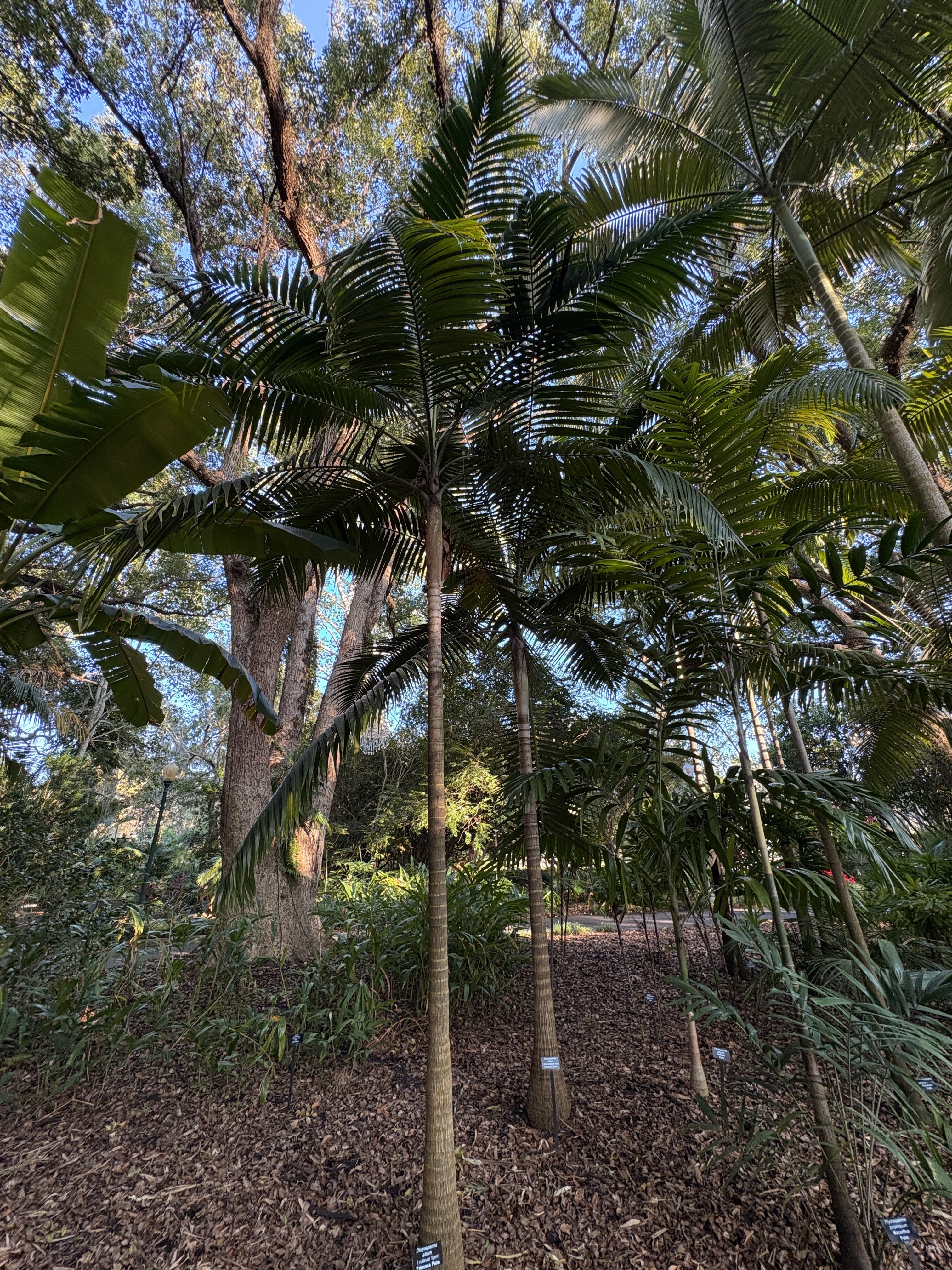
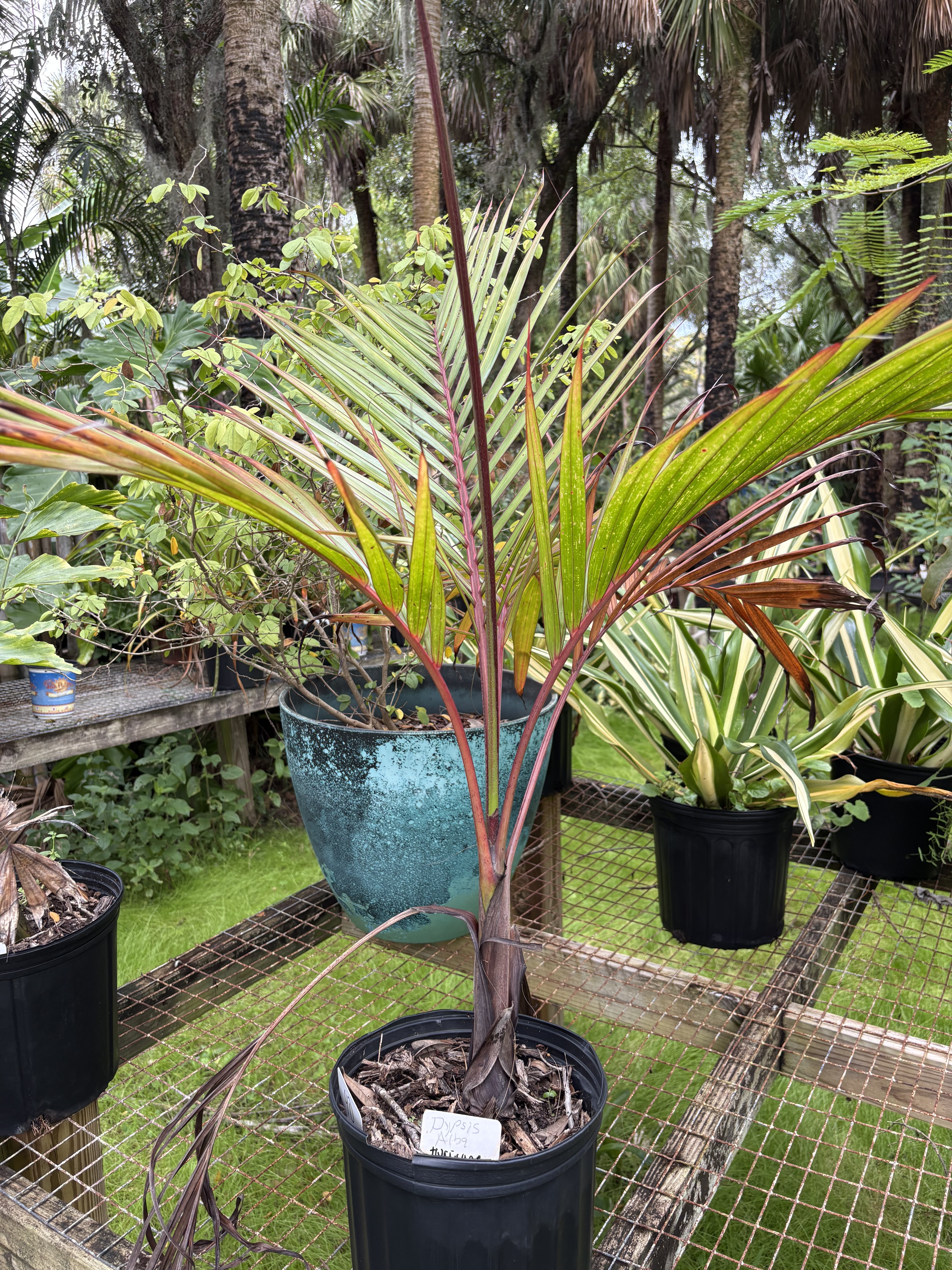
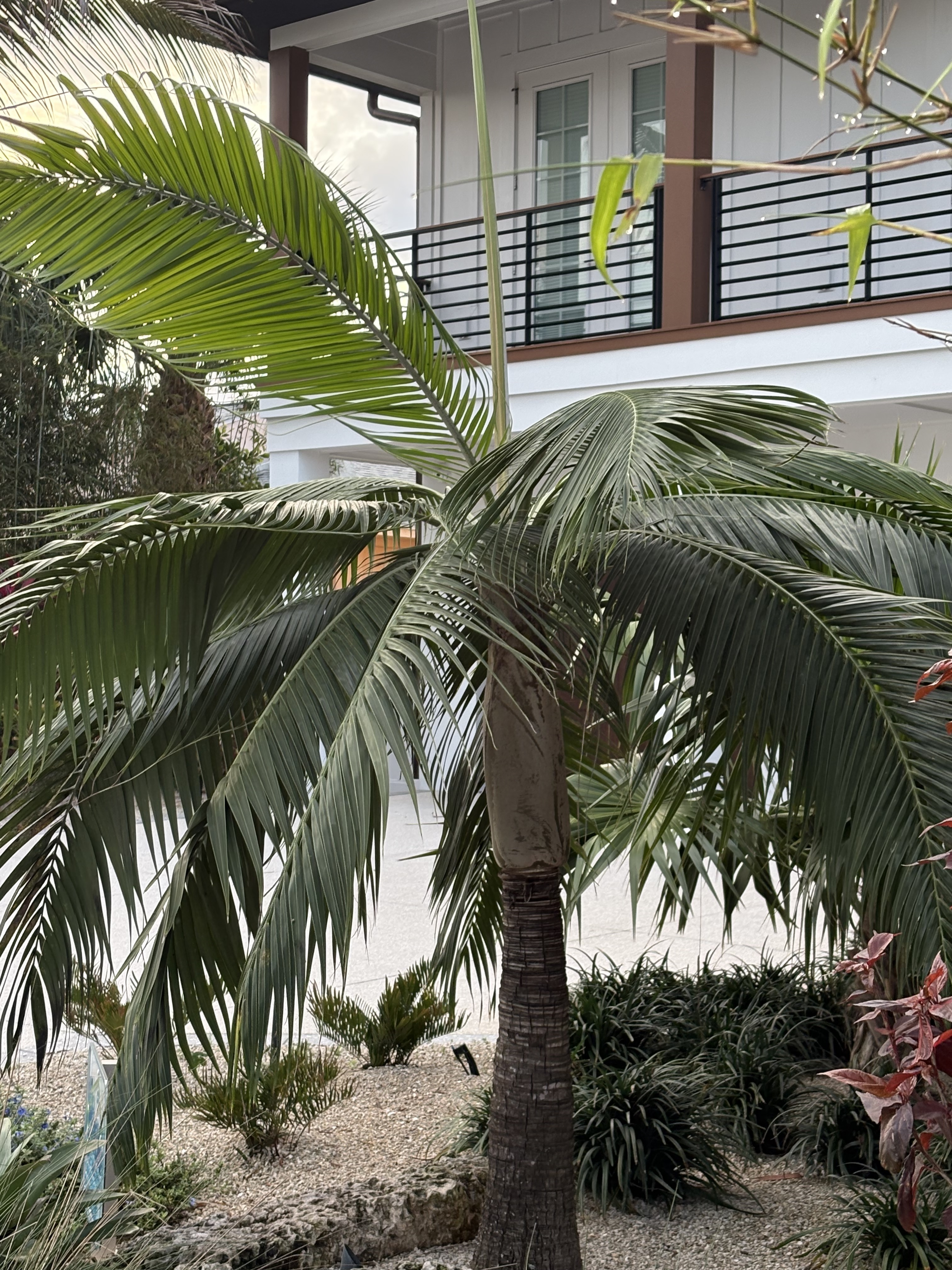
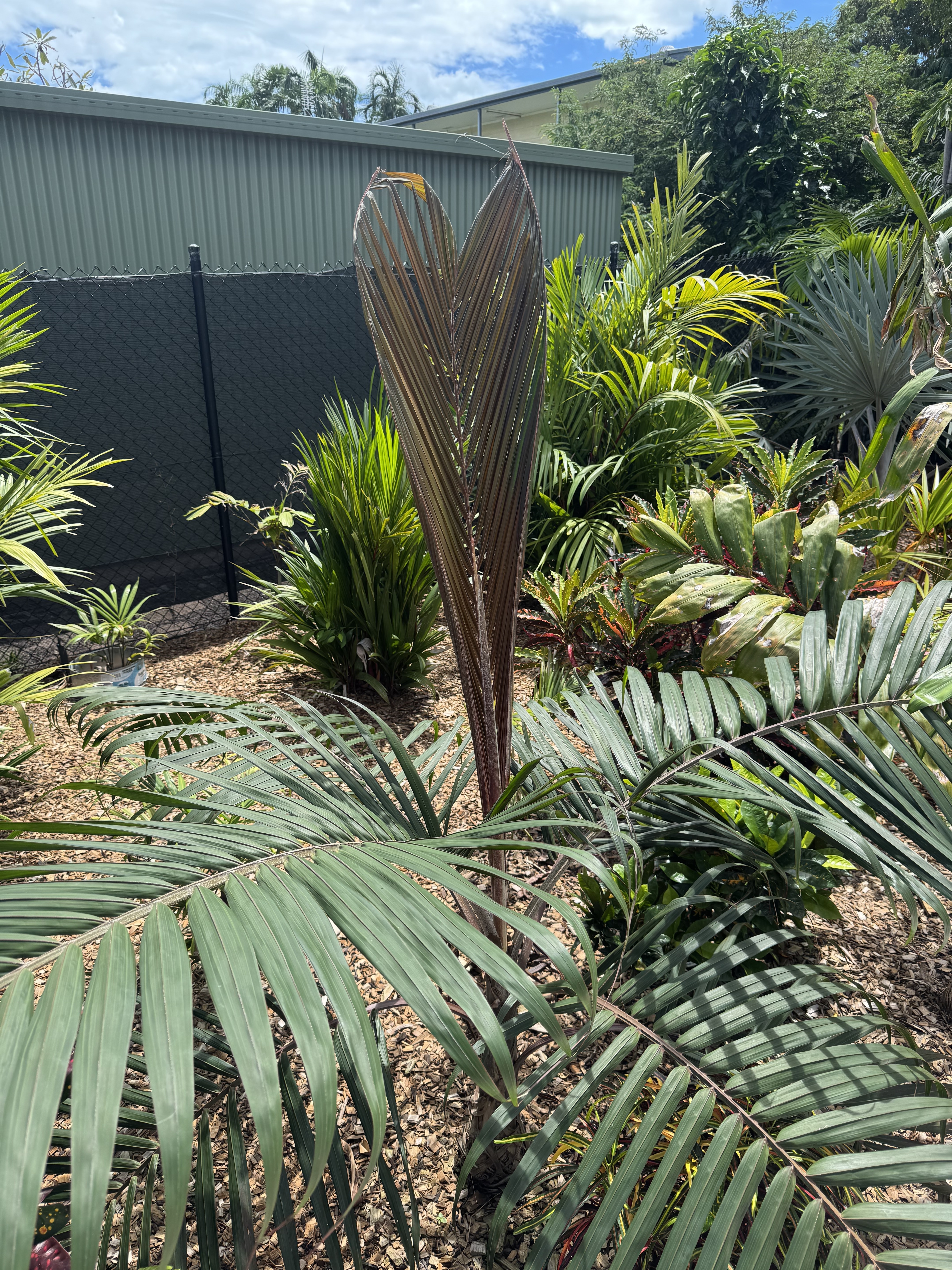
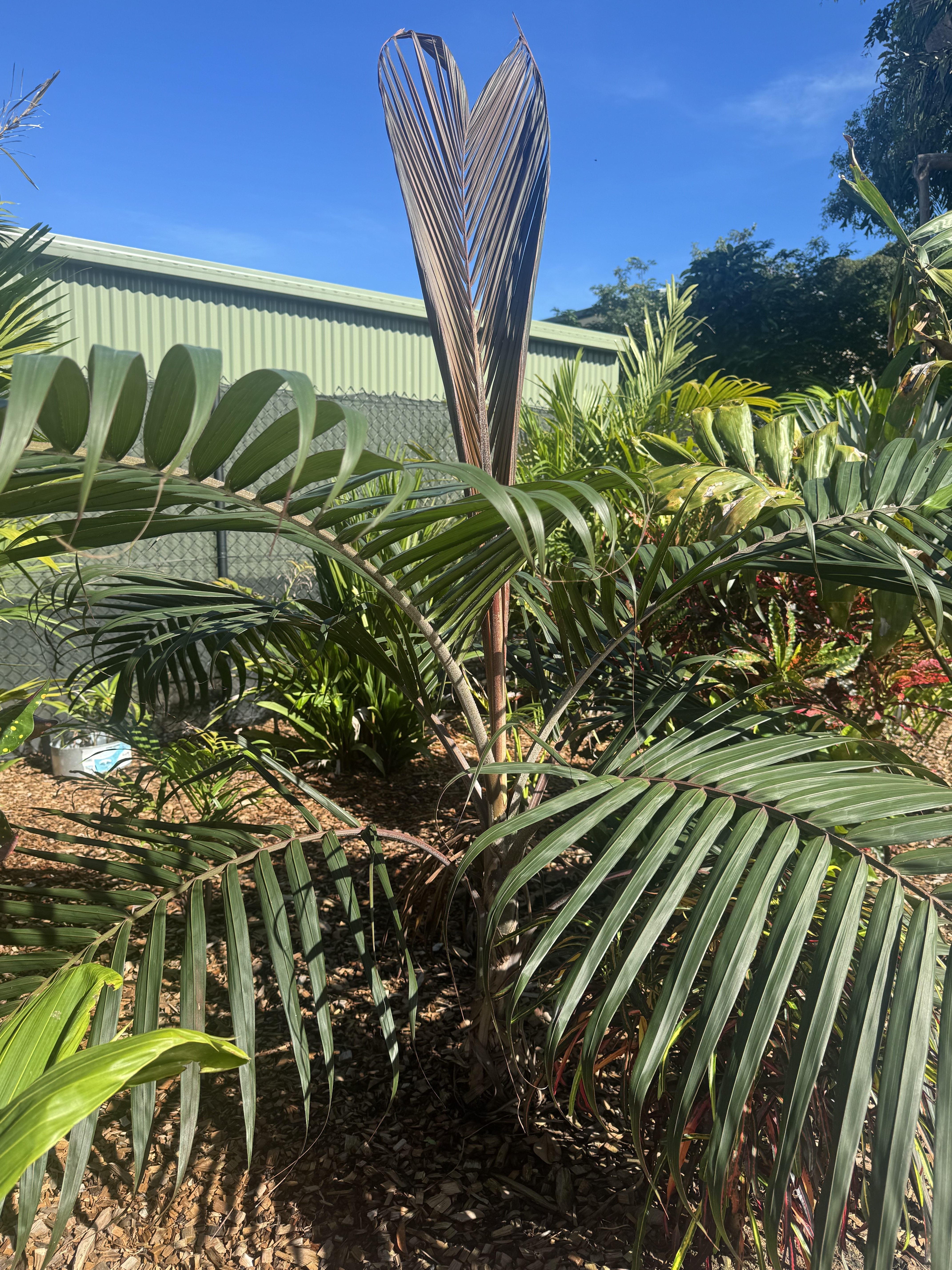
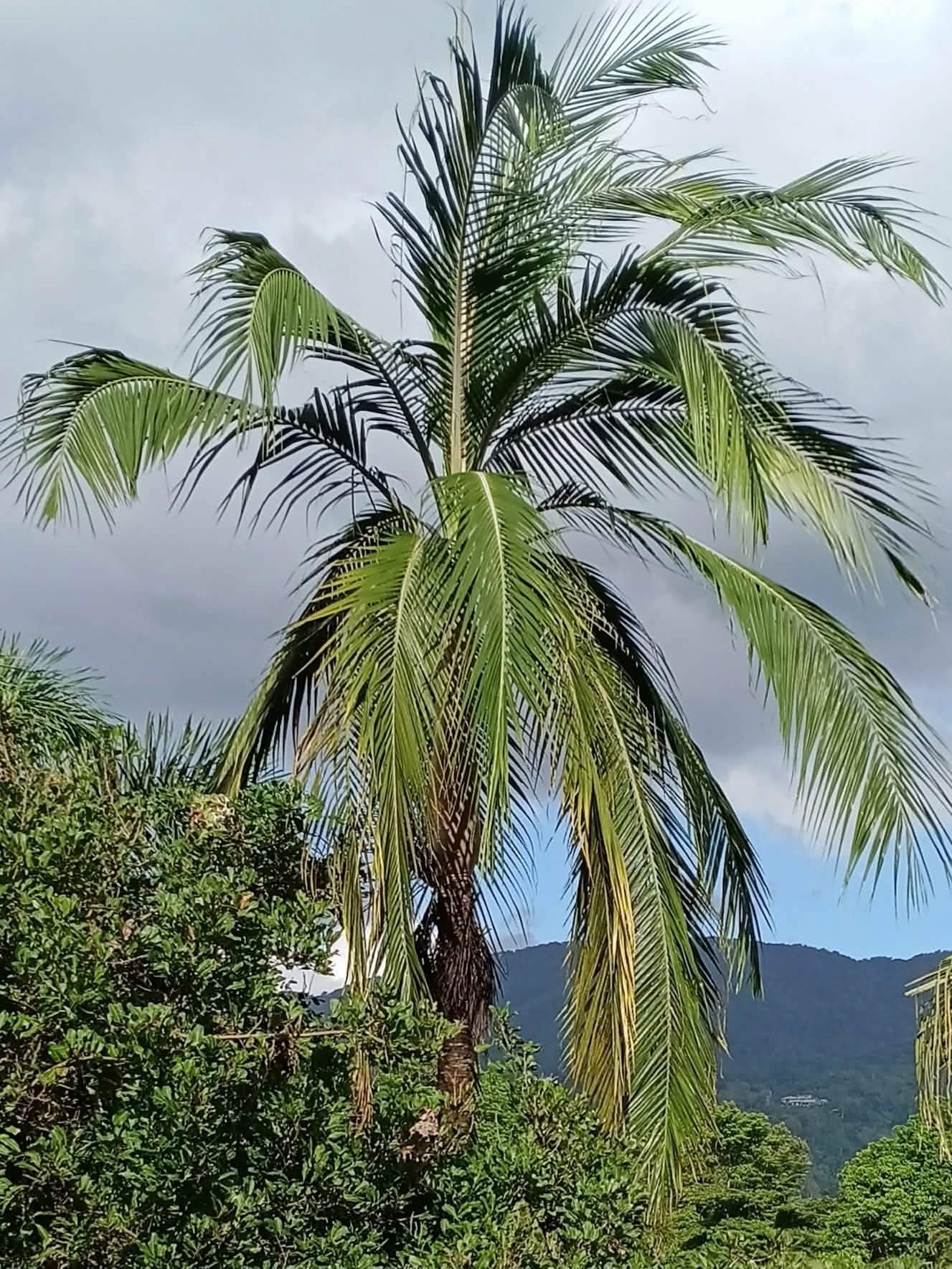
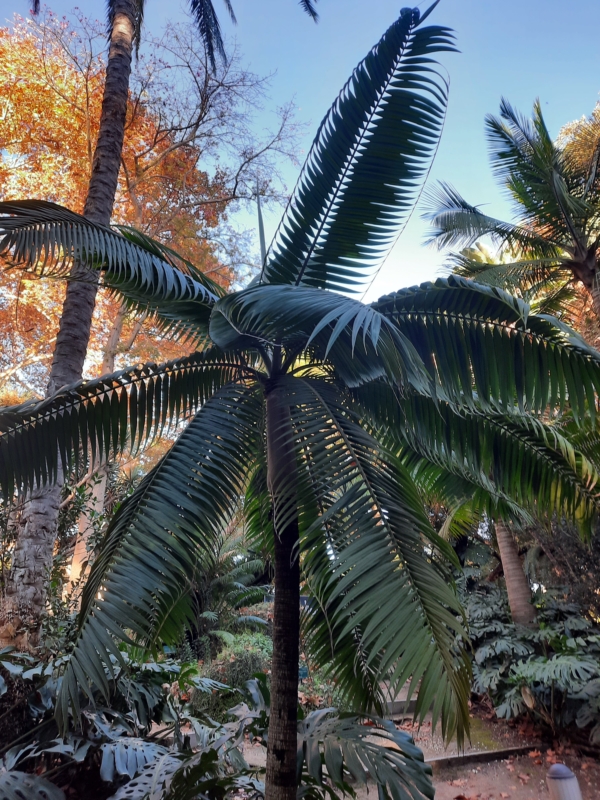
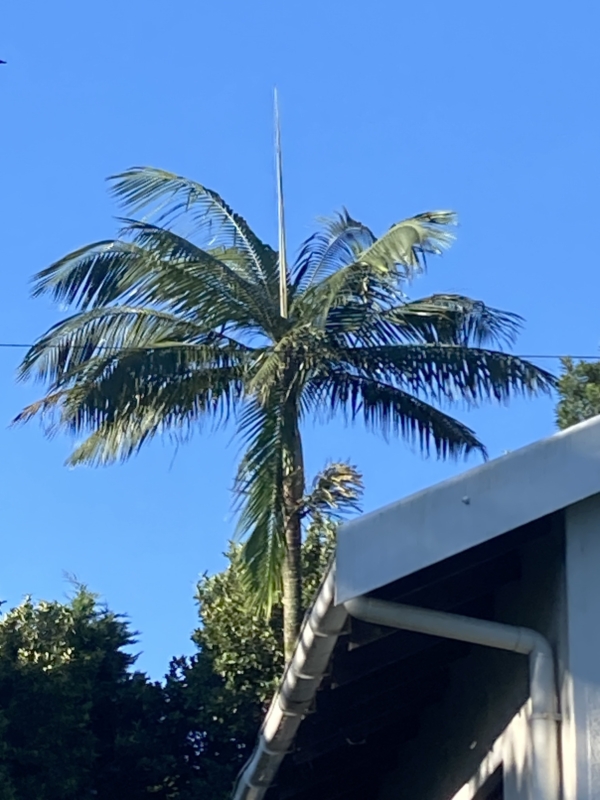
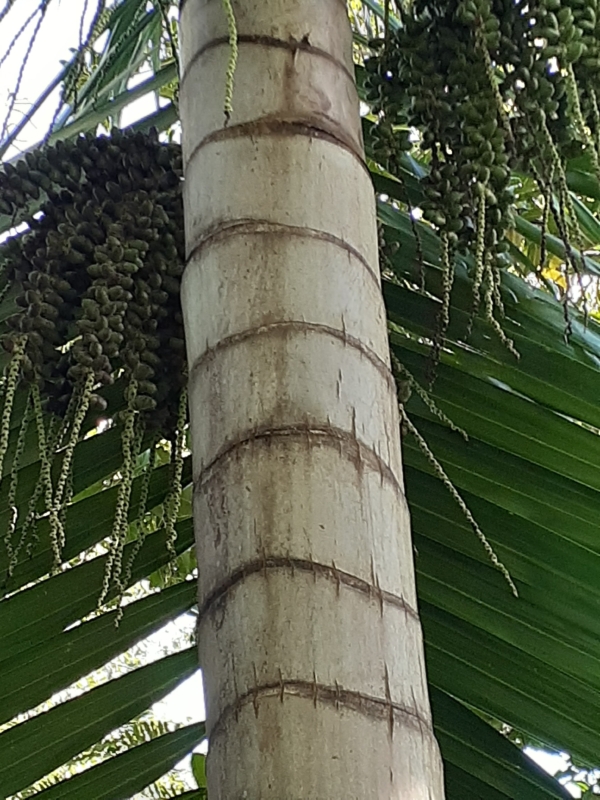
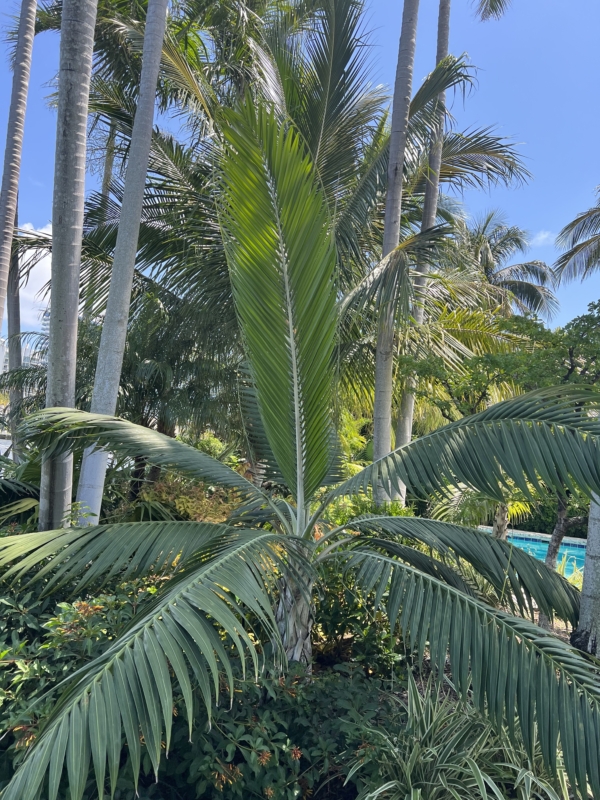
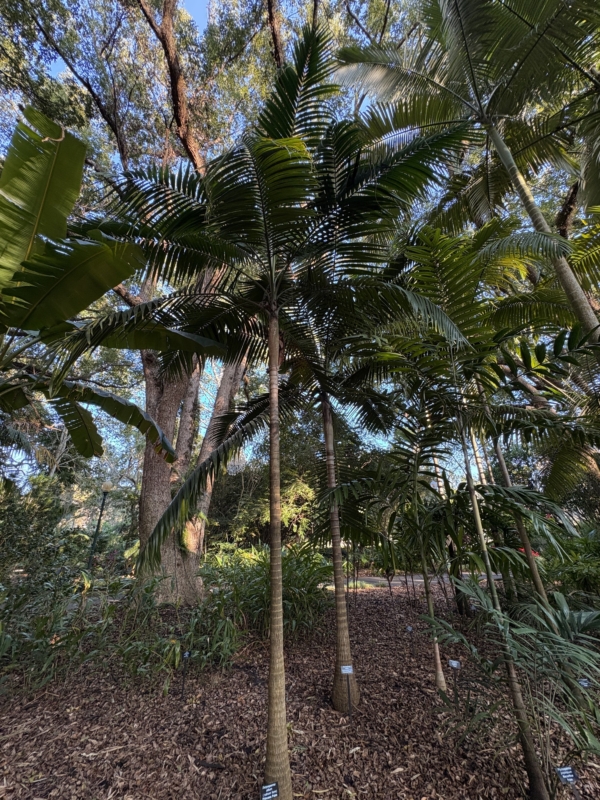
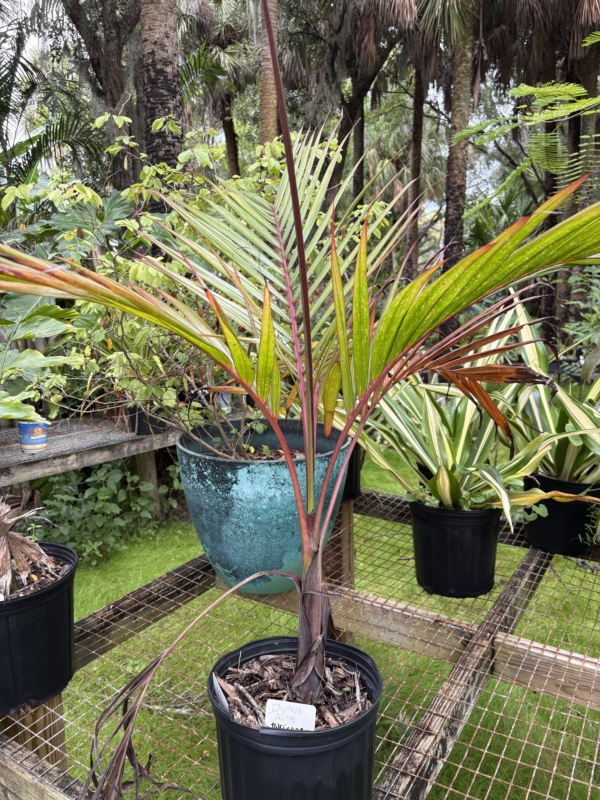
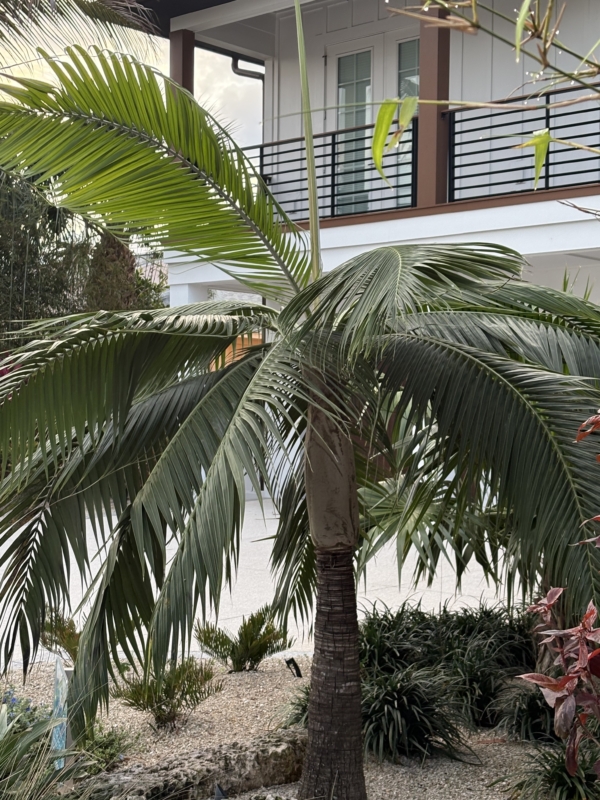
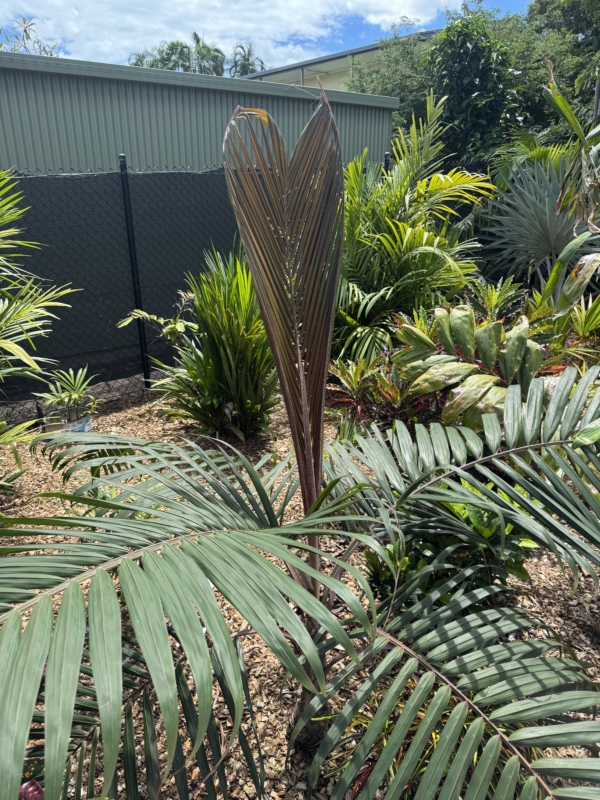
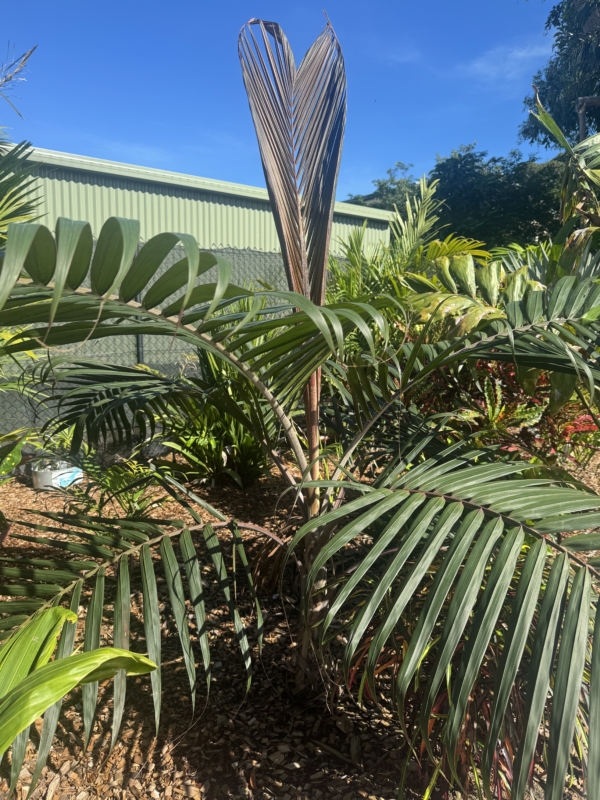
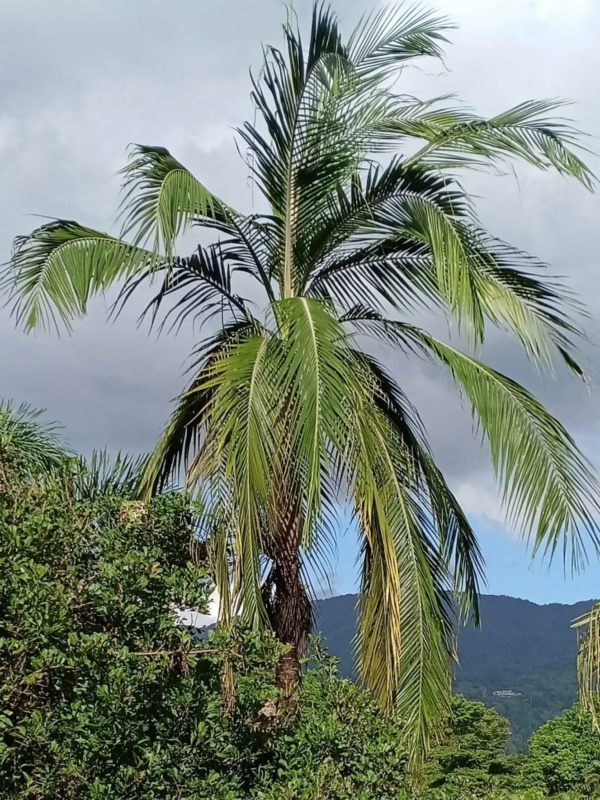
This is a solitary palm with a slender, smooth gray trunk marked by evenly spaced leaf scars. A prominent green crownshaft forms near the top of the trunk, created by the tightly clasping leaf bases that give the palm its elegant profile. The crown holds a graceful canopy of arching pinnate leaves with narrow leaflets arranged neatly along the rachis, creating a refined, symmetrical appearance. Branched inflorescences emerge just below the crownshaft and bear numerous small flowers that later develop into rounded fruits. The fruits mature from green to dark purple or black and contain a single seed. A unique feature of this species is the leaflet tips which often stay joined together, which creates quite a distinctive appearance. While this species is widely cultivated in tropical climates, it has been farmed to near extinction in its native habitat. Snynonymous with Dictyosperma album var. rubrum.
Known as the Hurricane Palm, a name earned from its remarkable ability to survive powerful tropical storms. Native to the Mascarene Islands, the palm evolved in a region frequently struck by cyclones. Its slender, flexible trunk and compact crown help it withstand intense winds that might damage more rigid trees, allowing it to bend and recover after storms.
Cultivation Tips
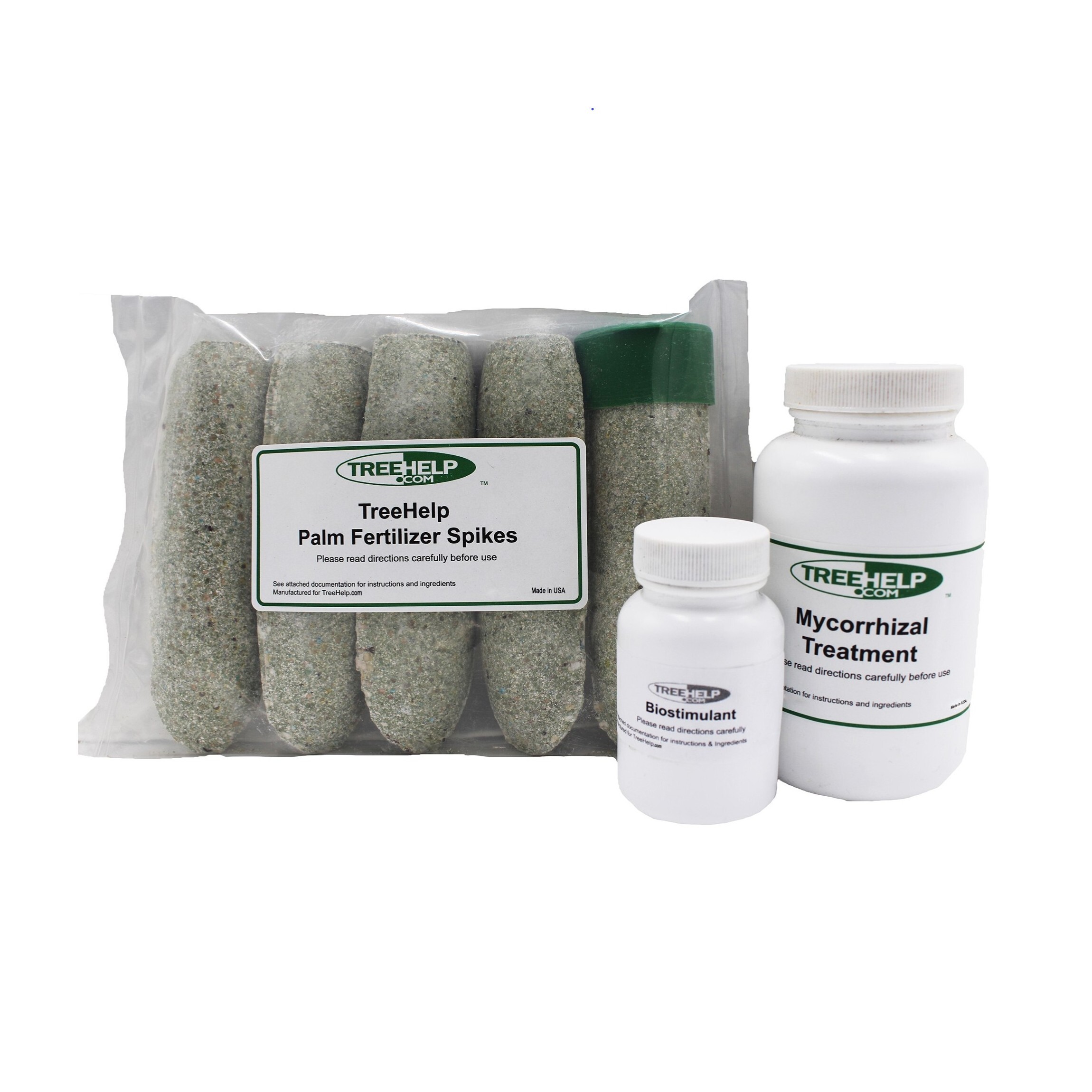
Plant this palm in a warm, protected location where it can grow into its tall, elegant form and remain sheltered from severe wind exposure. Young plants appreciate partial shade, while mature specimens perform best in full sun once established. Provide well-drained soil, ideally sandy or loamy, as this species dislikes prolonged waterlogged conditions. Water regularly during establishment but allow the soil surface to dry slightly between irrigations once mature. Apply a balanced palm fertilizer several times per year to maintain strong growth and healthy green foliage.